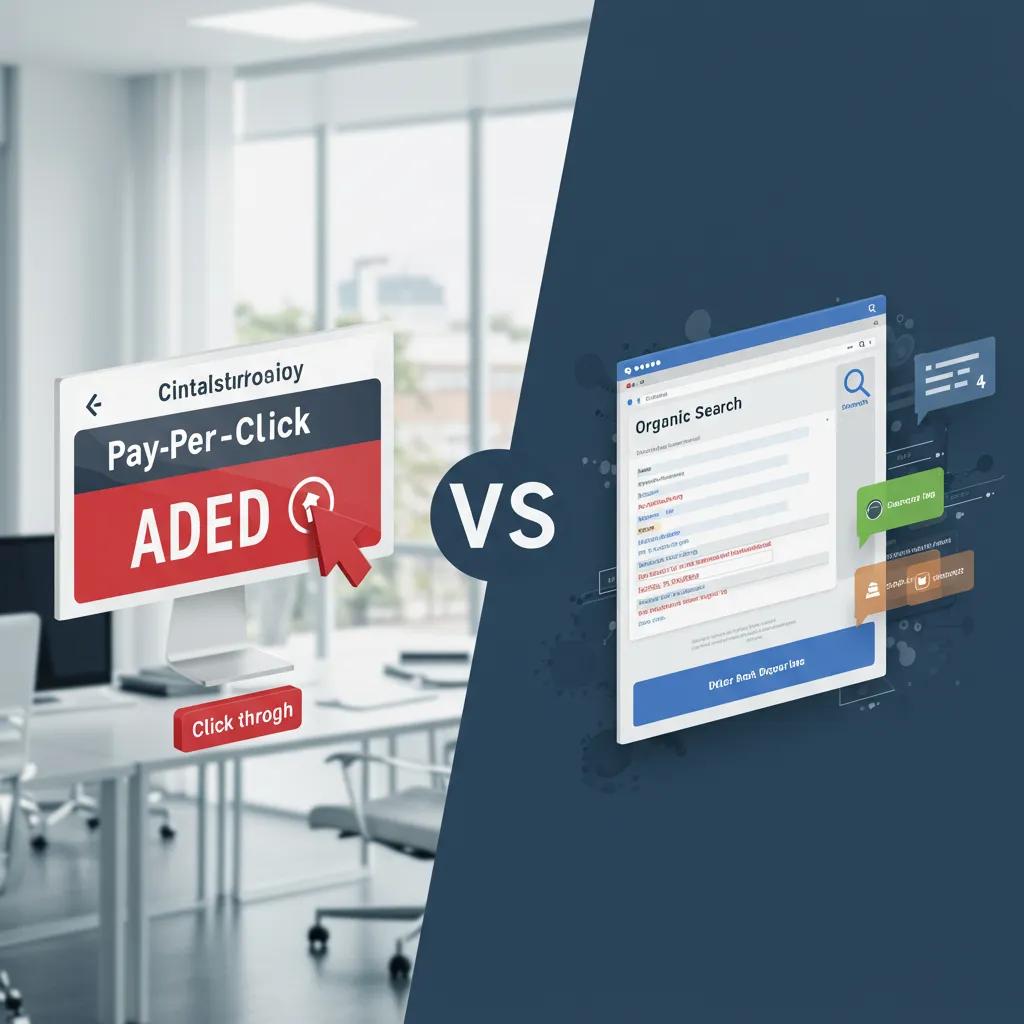
Many marketing leaders ask whether pay-per-click advertising or organic search optimization delivers better long-term cost savings, and the answer depends on time horizon, business model, and how well the two channels feed each other. PPC buys attention one click at a time. SEO builds an asset that keeps returning traffic after the work has been paid for. What follows is the cost structure behind each channel, the time each takes to pay back, and a practical way to run them together so paid data shortens the organic timeline. The comparison weighs CPC and ad spend against content, technical, and link-building investment, and frames the decision with the numbers finance teams already track: ROAS, CAC, and LTV.
Key Takeaways
- PPC pays for visibility one click at a time, so traffic stops when the budget stops, and competition for valuable keywords pushes CPC upward the longer a campaign runs.
- SEO front-loads spend into content, technical work, and links, then spreads that cost across traffic that carries no per-click fee, which lowers the marginal cost of each visit as pages rank.
- If you need conversions this quarter for a launch, a flash sale, or an untested offer, paid search is the cheaper way to buy certainty. If you sell high-LTV services and can wait months for compounding returns, organic search is where the durable savings sit.
- The two channels subsidize each other: PPC search query reports tell you which pages to write, and stronger organic landing pages lift Quality Score, which pulls CPC back down.
- Judge both on the same terms, using normalized CAC, ROAS, and LTV over comparable attribution windows, or the comparison will not be apples to apples.
What Is Pay-Per-Click and How Does It Deliver Immediate Marketing Results?
Pay-Per-Click (PPC) is a digital advertising model where advertisers pay each time a user clicks an ad, using auction-based bidding to win visibility on platforms like Google Ads and Meta Ads. Auctions weigh bid, ad relevance, and expected click-through, and that weighting is what turns budget into immediate clicks and measurable conversions. The key benefit is rapid visibility for targeted keywords, making PPC ideal for launches and time-sensitive offers. Understanding PPC mechanics helps teams decide when to buy traffic versus invest in organic channels.
How Does PPC Work and What Are Its Key Cost Structures?
PPC works through auctions where advertisers bid for queries and audiences, and platforms weigh bid, quality, and expected relevance to set ad rank. Cost models include cost-per-click (CPC), cost-per-thousand impressions (CPM), and cost-per-acquisition (CPA), each influencing short-term spend and attribution. Advertisers track metrics such as CTR, conversion rate, and ROAS to evaluate efficiency and optimize bids and creatives. These mechanics lead naturally to assessing PPC advantages for short-term goals and controlled experiments.
The three billing models below each carry a different budget consequence.
Each billing model is a separate budgetary lever, and the one you pick decides how directly spend is tied to a result.
What Are the Advantages of PPC for Short-Term Marketing Goals?
PPC delivers targeted traffic quickly by bidding on high-intent keywords and specific audience segments, producing measurable conversions within days. Advertisers can geo-target regions like Los Angeles or San Diego and scale spend up or down to control acquisition volume and cost. Creative and landing page testing runs fast, enabling iterative improvements in copy and offers for immediate ROAS gains. These advantages make PPC the default channel for time-limited promotions and early-stage demand capture.
Every one of those advantages is a function of speed, and speed is exactly what gets more expensive as competitors bid against you.
PPC offers several tactical benefits for short-term campaigns and rapid learning:
- Immediate Visibility: Quick entry on search results and social feeds for targeted queries.
- Precise Targeting: Audience, device, and geo controls reduce wasted impressions.
- Fast Experimentation: Rapid A/B testing of creatives and landing pages optimizes conversions.
These strengths explain why many teams start with paid campaigns to validate offers before longer-term organic investment.
What Are the Limitations and Ongoing Costs of PPC?
PPC requires continuous ad spend; once budget stops, paid traffic ceases and acquisition halts until spend resumes. Competition for valuable keywords drives CPC inflation over time, raising ongoing CAC for persistent campaigns. Ad fatigue, creative churn, and platform policy shifts demand ongoing optimization and monitoring to sustain ROAS. Recognizing these limitations frames when to shift resources into organic investments that compound over time.
Continuous spend is the structural weakness that organic search does not share.
How Does Organic Search Provide Long-Term Cost Savings and Sustainable Growth?
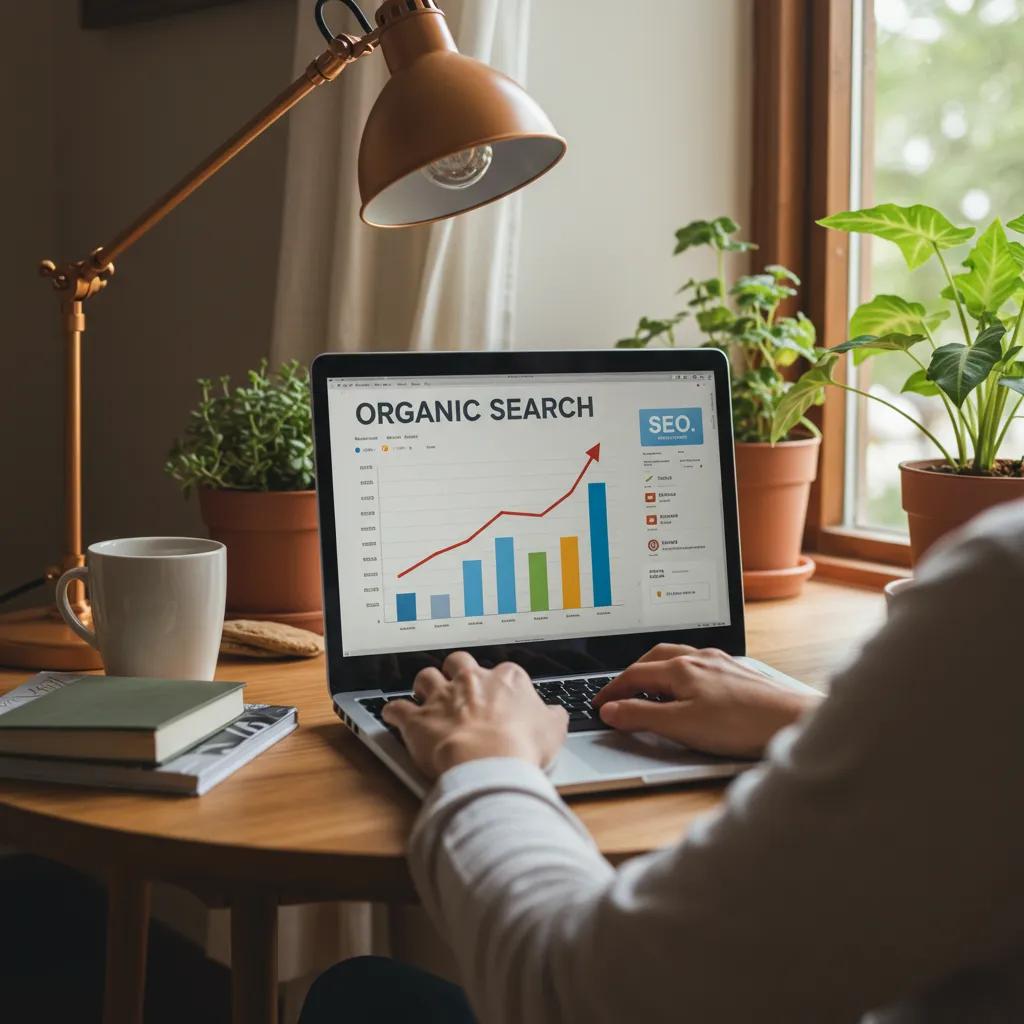
Organic search optimization (SEO) builds visibility through content relevance, technical optimization, and backlinks, producing traffic that does not incur per-click fees and scales with compounding returns. Ranking improvements are what convert search intent into recurring visits and leads at a lower marginal cost over time. Primary benefits include steady traffic, improved brand credibility, and lower long-term CAC when top positions convert. Understanding SEO investments and timelines clarifies why organic search often yields superior cost efficiency for sustained growth.
What Is SEO and How Does It Build Credibility Over Time?
SEO increases credibility by aligning content quality, site performance, and external authority to meet user intent and search quality signals. Content that answers high-value queries and earns backlinks improves organic rankings and increases organic click-through rates compared to unknown paid placements. Technical SEO and user experience further support conversion rates by reducing friction on landing pages and improving indexability. As credibility grows, organic positions deliver more efficient leads and reinforce brand trust without incremental per-click charges.
That credibility is also what makes the underlying investment pay back.
Organic spending splits into three workstreams, each with its own payback window.
The split matters for planning: technical fixes surface first, content follows, and links compound the longest.
What Are the Cost Benefits and ROI of Investing in SEO?
SEO amortizes upfront costs across sustained traffic, lowering the marginal cost per visit as content ranks and accumulates clicks without direct per-click fees. Over time, high-ranking pages can deliver a significantly lower CAC compared with equivalent-paid keywords, particularly for evergreen, high-intent queries. Measuring ROI requires comparing lifetime value (LTV) of organic leads against acquisition cost and considering attribution windows for content-driven conversions. These cost benefits explain why businesses aiming for long-term sustainability prioritize organic search.
Those timelines assume a clear run, and several common obstacles stretch them.
What Challenges Affect the Time to Results and Ongoing SEO Efforts?
SEO faces delays from competition, search algorithm updates, and the need for consistent content production and technical maintenance. Recovering from technical debt or ranking volatility often requires audits, fixes, and sustained link and content strategies to regain momentum. Resource allocation must account for editorial cadence, developer time, and measurement infrastructure to protect long-term gains. Mitigation strategies include regular audits, prioritized content sprints, and monitoring to shorten time to value.
Those obstacles are the real price of organic search, which is why the two channels deserve an apples-to-apples comparison.
How Do PPC and Organic Search Compare in Terms of Cost Effectiveness and ROI?
PPC and SEO differ across initial cost, ongoing cost, and time to results, with PPC favoring immediacy and SEO favoring compounded savings over time. Comparing initial setup and maintenance, PPC typically requires budgeted ad spend and campaign setup, while SEO requires upfront content and technical investment that pays off gradually. Using comparable KPIs like CAC, ROAS, and LTV produces clearer decisions about channel allocation. A side-by-side comparison makes those trade-offs concrete for budget planning.
Here is how the two channels, and a blended approach, line up on cost and timing.
The pattern is consistent: PPC buys speed, SEO buys durability, and a hybrid buys both at the cost of managing two disciplines at once.
What Are the Key Differences in Initial and Ongoing Costs Between PPC and SEO?
PPC’s initial costs revolve around campaign creation and media budgets, with ongoing costs scaling to maintain volume and competitive bids. SEO’s initial costs are heavier on content and technical work, while ongoing expenses center on content cadence and link acquisition. Attribution complexity can obscure direct comparisons, so teams should normalize CAC and consider LTV over comparable windows. Framing costs this way helps teams choose the appropriate short- and long-term investments.
Normalized that way, the question stops being which channel is better and becomes which one fits the situation.
When Is PPC More Cost-Effective Than Organic Search?
PPC is more cost-effective when time-to-market is critical, for product launches, flash sales, or validating offers that require immediate conversions. For high-intent, short-purchase-cycle customers, paid clicks often convert faster and justify acquisition costs. PPC also serves well for testing messaging and identifying high-converting keywords to prioritize for organic content. Knowing these scenarios helps allocate initial budgets efficiently.
The mirror image of those use cases marks out where organic search wins instead.
When Does SEO Offer Better Long-Term Cost Savings?
SEO delivers better long-term cost savings for businesses that seek sustained lead generation, brand building, and markets where evergreen content attracts continual demand. High-LTV services and products benefit from organic traffic that reduces CAC as content accumulates authority and backlinks. When organizations can wait months for compounding returns, SEO often yields lower lifetime acquisition costs than perpetual paid spend. This perspective highlights how brand credibility and content compounding reduce marketing cost over time.
Underneath both channels sits one factor that changes the economics of each: brand credibility.
How Does Brand Credibility Influence Marketing Cost Savings?
Brand credibility from organic presence lowers conversion friction, improving CTR and reducing reliance on expensive paid bids to build trust with users. A consistent organic footprint plus paid visibility multiplies trust signals, which can lower CPC via improved Quality Score and increase conversion rates across channels. Investing in brand-building content thus creates a multiplier effect on both organic and paid performance. Recognizing that credibility affects CAC completes the comparative ROI picture.
That multiplier is the argument for running paid and organic as one program rather than two separate budgets.
How Can Integrating PPC and SEO Maximize Long-Term Marketing Cost Savings?
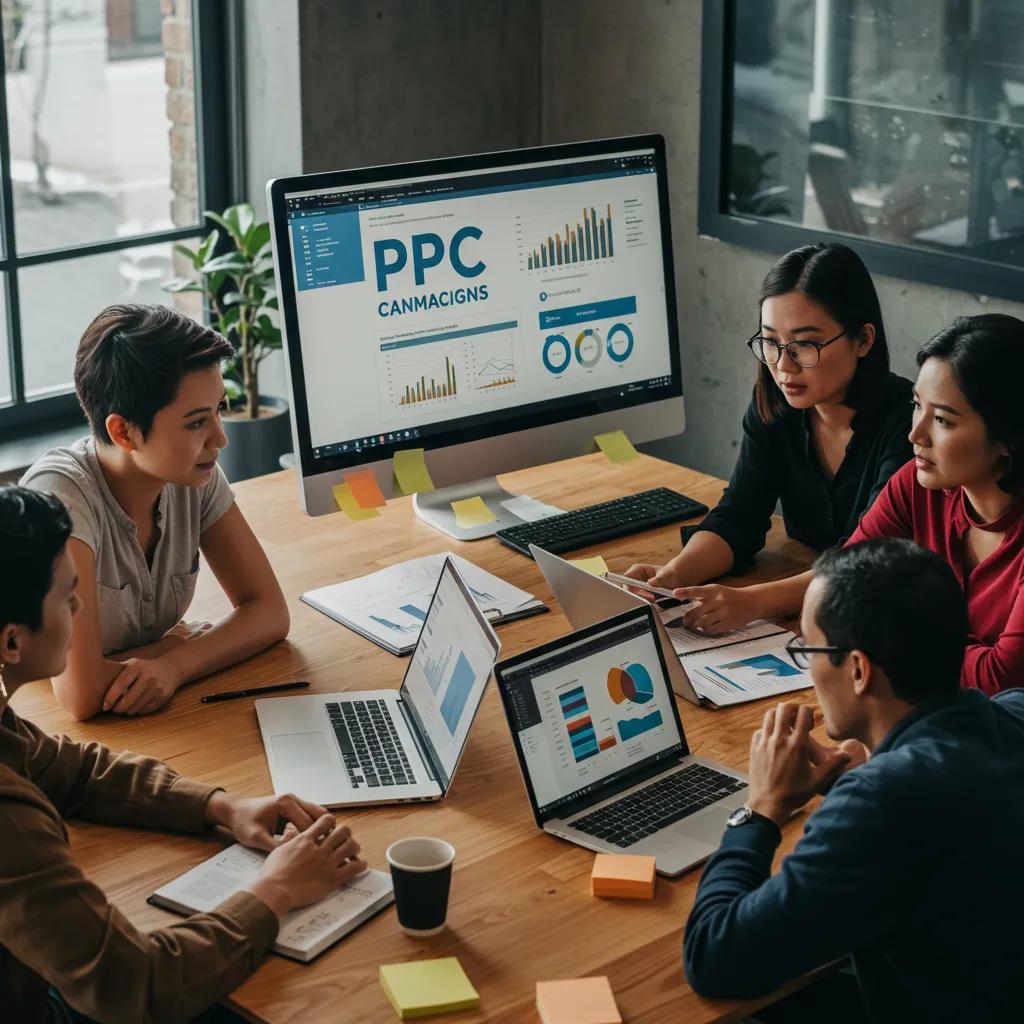
Integrating PPC and SEO creates a feedback loop where paid search yields rapid data to inform organic priorities, and organic assets improve paid performance through relevance and reduced CPC. In practice, PPC search query reports, high-converting ad copy, and audience segments set the priority order for SEO topics and landing page enhancements. A three-step integration blueprint accelerates insights while preserving long-term organic cost efficiencies. This integrated approach is essential for teams seeking both short-term results and sustained cost savings.
How Does PPC Data Inform and Enhance SEO Strategies?
PPC provides real-world conversion data and high-intent search queries that reveal what converts and which keywords are profitable, enabling SEO teams to prioritize content that drives value. Exporting search query reports and mapping them to content gaps identifies pages to create or optimize first. Ad copy tests can inform organic meta descriptions and headlines that improve CTR for organic listings. Using paid data as a prioritization engine shortens SEO time-to-value.
Leveraging PPC Data for SEO Content Strategy
This includes using the paid search data to identify content gaps and opportunities. By leveraging paid search data, marketers can focus their time and resources on SEO efforts that are most likely to yield results, thereby improving efficiency and ROI.
The relationship runs in the other direction as well.
How Does SEO Support and Improve PPC Campaign Performance?
SEO strengthens landing page relevance and authority, which can improve ad Quality Score and reduce CPC for the same keywords, lowering ongoing paid costs. Well-optimized content assets supply trusted content for paid campaigns and remarketing, improving conversion rates for paid traffic. Coordinating landing page updates and shared asset libraries ensures both channels benefit from the same optimizations. The practical unit of work is a shared landing page backlog that both teams draw from.
SEO & PPC: Synergies for Digital Marketing Success
The article discusses the integration of SEO and PPC, noting that both are essential for a comprehensive digital marketing strategy. It highlights how understanding the interplay between them, including factors like Quality Score and CPC, can lead to better overall campaign performance.
What Are Best Practices for Building a Holistic Digital Marketing Strategy?
A unified strategy uses shared KPIs, synchronized content calendars, and joint analytics to measure CAC, ROAS, and organic traffic growth across channels. Operational best practices include weekly paid performance reviews, monthly SEO audits, and shared dashboards that surface high-impact opportunities. Employing AI-powered reporting to prioritize actions can further accelerate cost savings by focusing resources on the highest ROI tasks. These practices create a governance model that turns channel integration into measurable savings.
SEO vs. PPC for Online Marketplace Growth: Expert Opinions
This paper explores how sellers can use SEO and PPC strategies to grow on online marketplaces. It provides a literature review of SEO and PPC practice, giving a broad view of how sellers combine the two channels.
How Does ByteZero’s AI-Powered Approach Optimize PPC and SEO for Cost Savings?
ByteZero combines AI-powered insights with transparent reporting to accelerate audience research, keyword prioritization, and content ideation while keeping clients informed with clear KPIs. Automated bid optimization and audience segmentation reduce wasted ad spend, and AI-driven content recommendations help prioritize high-impact organic topics. ByteZero offers Paid Ads Management and AI-Driven SEO as managed service examples that support both immediate visibility and long-term organic growth. This brief overview explains how an AI-driven partnership reduces CAC and increases long-term marketing efficiency.
How Does AI Enhance Cost Efficiency in Paid Ads and Organic Search?
AI enhances paid performance by predicting bidding outcomes, automating audience refinement, and reallocating budget to the highest-yield segments in real time. For organic search, AI surfaces content gaps, suggests headline and meta improvements, and ranks topic priorities to shorten time-to-value. These capabilities reduce manual testing cycles and lower both CPC and marginal content costs. Predictive and automated systems therefore create measurable cost-savings across paid and organic channels.
What Client Success Stories Demonstrate ByteZero’s Long-Term ROI?
ByteZero presents client work as a consistent narrative: the challenge, the AI-driven approach applied to it, and the outcome that followed. The format emphasizes how ByteZero used predictive bidding, audience segmentation, and prioritized content to address client acquisition goals. Readers are invited to explore full case materials and review sample methodologies to evaluate applicability to their market. Presenting outcomes in this way shows the pathway to sustainable ROI without overstating results.
How Does Transparent Reporting Build Trust and Support Cost Optimization?
Transparent reporting provides regular KPIs, including CPC, CTR, conversion rate, ROAS, and organic traffic growth, and ties them to action items that improve performance. Dashboards and cadence meetings enable rapid reallocation of budget and content focus to high-performing tactics, which reduces waste. Clear reporting also aligns internal teams on goals and creates accountability for cost-saving measures. ByteZero’s free audit and consultation offer a structured way to review current reporting and identify immediate savings through combined Paid Ads Management and AI-Driven SEO.