

Google Ads behaves differently depending on the industry running it. A law firm competing for a handful of high-intent searches a week has little in common with a retailer moving inventory through product listing ads, even though both sit on the same platform. ByteZero Inc. manages campaigns for both kinds of advertiser, and the account structure, keyword strategy and reporting all shift with the sector. Here is how that plays out in legal services, healthcare, e-commerce, real estate and B2B.
Key Takeaways
- Account structure changes by sector: legal campaigns are built around a small set of high-intent queries, e-commerce around feed quality and product-level segmentation, healthcare around informative pages patients read before booking.
- Real estate and B2B campaigns are judged on cost per lead, return on ad spend and client acquisition cost rather than click volume.
- Legal advertising sits under bar association rules and platform policy, so compliance is checked while ad copy is written instead of after a disapproval.
- Location and radius settings matter more for healthcare and service businesses than bid adjustments do, and crowded verticals need a value proposition a competitor cannot copy.
- Budget follows measurable return and seasonal demand peaks, with A/B testing plus CPC and CTR tracking deciding which ad formats keep their share.
The sections below cover which sectors we work in, how those campaigns are managed day to day, and how budget gets allocated when one platform has to serve very different business models.
Which Business Sectors Benefit Most from Our Google Ads Campaign Management?
Google Ads pays off most in sectors where the buyer is already searching for a specific service and a single customer is worth enough to justify the click cost. Each of those sectors asks something different of the account, so the strategy gets built per industry rather than copied between them.
ByteZero Inc. excels in implementing successful Google Ads strategies across several industries including:
- Legal Services: Competition on legal keywords is heavy, so campaigns get narrowed to the practice areas and client types a firm actually wants rather than bidding across the whole category.
- Healthcare: Patients research before they book, so ads point to informative pages and answer the question behind the search instead of pushing straight to a booking.
- E-commerce: Ads have to connect a search to a specific in-stock product page, which puts feed quality and product-level structure at the center of the account.
Splitting the work by sector keeps the keyword, the ad and the landing page talking about the same thing, which is most of what conversion rate depends on.
How We Tailor Google Ads Strategies for Legal and Professional Services

Work on a legal account starts with who the firm wants to hear from, then moves to the searches those people actually type. Ad copy gets written against those queries rather than against the practice-area list on the website. The destination matters as much as the ad, which is why website development and design for lawyers often runs alongside the campaign.
- Target Audience Identification: Families, small businesses and individuals in a dispute all search differently, so the audience gets defined before a single keyword is added.
- Keyword Research: High-intent phrases get separated from research phrases so budget follows the searches made by someone ready to call.
- Compelling Ad Copy Examples: A clear call to action and a genuine point of difference tend to do more for engagement than adjectives.
These strategies have demonstrated substantial improvements in lead generation for our legal clients, with many reporting increased contact on their websites and inquiries.
What Results Have We Achieved Across Healthcare and Ecommerce Industries?
Healthcare accounts pair high-intent keywords with audience targeting so the message matches what a patient is looking for, whether that is advice or an appointment. For example, campaigns focusing on urgent care facilities or specialized services have shown marked success.
Our campaigns in e-commerce, on the other hand, have seen significant returns through targeted ad spend. Product-level reporting shows which items pull attention, and budget moves toward them. New launches reach buyers sooner as a result.
Which Metrics Define Campaign Success in Real Estate and B2B Campaigns?
Real estate and B2B campaigns get judged on cost, not clicks. Three numbers do most of that work.
- Cost per Lead (CPL): This metric identifies how much is spent to acquire a single lead, helping clients understand their investment vs. return.
- Return on Ad Spend (ROAS): Revenue divided by spend, which is the number that decides whether a campaign keeps its budget.
- Client Acquisition Cost (CAC): The full cost of winning a client once every marketing expense is counted, which is what the next budget gets built from.
Reviewing these on a set schedule is what keeps an account from drifting.
How Do Our Tailored Campaigns Achieve Industry-Specific ROI Improvements?
Industry-specific structure is what moves return. ByteZero works from account data, and case studies reflecting significant ROI improvements can be shared with prospective clients.
- Industry Benchmarks: We analyze standard performance metrics within each sector to inform our strategies.
- ROI Metrics: Goals get set before launch so there is something to measure against afterwards.
- Client Success Stories: Documented results from previous clients serve as powerful testimonials to our effectiveness.
For instance, one of our e-commerce clients saw a 150% increase in sales attributed directly to optimized Google Ads campaigns focused on seasonal promotions. Examples like that are the sort of evidence worth asking any agency to produce.
How Do We Manage Diverse Google Ads Campaigns Across Multiple Industries?
Running accounts in several industries at once only works if the differences get handled deliberately. A few things stay constant regardless of sector.
- Campaign Management Processes: Tracking goes in first, so changes get made against data rather than instinct.
- Tailored Strategies per Industry: Each vertical gets its own keyword logic, ad copy and landing pages.
- Performance Metrics Across Sectors: A shared set of metrics makes accounts comparable even when the industries are not.
What Industry-Specific Challenges Do We Address in Google Ads Management?
Every industry brings its own obstacles. Legal advertising, for one, runs into advertising rules before it runs into competition.
- High Competition Contexts: Real estate and e-commerce sit in crowded auctions, so the ad has to say something a competitor cannot copy.
- Regulatory Compliance in Legal Ads: Legal services sit under bar association rules as well as platform policy, so compliance gets checked while the ads are written, not after a disapproval.
- Local Market Targeting Strategies: Radius and location settings carry more weight for healthcare providers and service businesses than any bidding tweak.
The job is to stay inside the rules without writing ads that say nothing.
Which Tools and Data Analytics Enhance Our Cross-Industry Campaign Management?
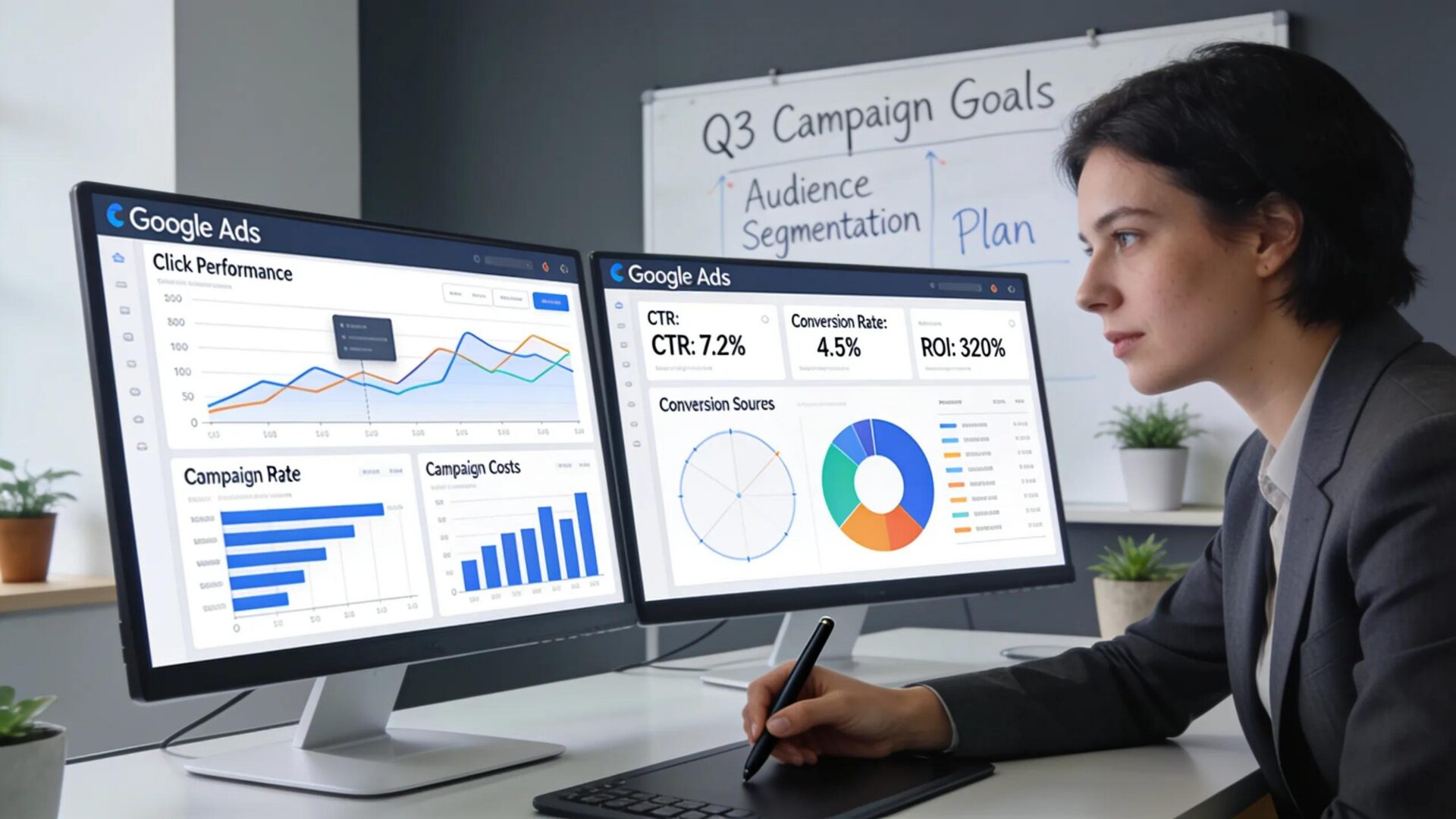
Tooling is what makes managing several accounts at once practical. It shows what an audience does after the click, not just before it.
- Campaign Management Tools: Google Analytics covers what happens after the click, which is where most optimization decisions come from.
- Data Analysis Techniques: A/B and multivariate tests decide which headline, image or offer stays.
- Performance Tracking Metrics: Metrics such as CPC (Cost Per Click) and CTR (Click-Through Rate) inform decisions related to budget allocation.
Together they replace guesswork with a record of what already worked.
How Can Businesses in Different Sectors Maximize ROI Through Customized Google Ads?
Return improves when the campaign matches how the industry actually buys. Three habits do most of that work.
- Tailored Marketing Approaches: Write ad messaging from what the account data already shows, not from what the brand wants to say.
- Performance Tracking: Live reporting catches problems in days rather than quarters.
- Budget Allocation Techniques: Knowing when demand peaks matters more than the size of the monthly budget.
What Industry Trends Inform Our Google Ads Strategies for 2026 and Beyond?
AI-driven bidding and asset generation now sit inside the platform itself, which changes what an advertiser is actually managing.
- Emerging Technologies: Automated targeting handles more of the bidding, so the input that matters most is the quality of the signals it gets.
- Changes in Consumer Behavior: Buyers expect the ad to match what they searched for, and they notice when it does not.
- Crowded Auctions: Auctions get busier as more advertisers automate, which raises the value of a distinctive offer.
We fold these into client accounts once they stabilize, rather than on the day they are announced.
How Does Industry Specialization Shape Google Ads Budget Allocation and Performance?
Where the money goes usually matters more than how much of it there is.
- Budgeting Strategies in Various Sectors: Different industries may require more aggressive budgeting during peak marketing periods, like the holiday season for retailers.
- ROI Considerations: Budget should follow the campaigns with a measurable return, not the ones with the most volume.
- Ad Spending Effectiveness: Comparing formats side by side shows which ones have earned their share of the spend.
Tailored budgeting strategies lead to effective campaign management and sustained ROI improvements.
Frequently Asked Questions
Which industries does ByteZero manage Google Ads campaigns for?
Legal and professional services, healthcare, e-commerce, real estate and B2B are the sectors covered here. What they share is a buyer who searches with clear intent and a customer worth enough to justify paid clicks. What differs is the account itself: legal work is built around a small set of expensive queries, while e-commerce runs on product feeds and listing ads.
How does Google Ads strategy change from one industry to another?
The differences are structural rather than cosmetic. Legal campaigns separate high-intent phrases from research phrases so budget follows people ready to call. Healthcare sends traffic to informative pages because patients read before they book. E-commerce depends on feed quality and product-level segmentation. Real estate and B2B are measured on cost per lead instead of click volume. The platform stays the same; the account does not.
Which metrics show whether a real estate or B2B campaign is working?
Three of them. Cost per lead shows what a single enquiry costs to generate. Return on ad spend, revenue divided by spend, decides whether a campaign keeps its budget. Client acquisition cost captures the full cost of winning a customer once every marketing expense is counted. Click-through rate is useful for diagnosing an ad, but it will not tell you whether the account is profitable.
How do advertising regulations affect legal campaigns on Google Ads?
Law firms advertise under bar association rules as well as Google policy, and both restrict certain claims and comparisons. That pushes the compliance review into the copywriting stage rather than leaving it until an ad is disapproved. In practice, legal ads lean on a clear call to action and a genuine point of difference, because superlatives are usually the part that gets flagged.
How should Google Ads budget be allocated across industries and seasons?
Timing usually matters more than the total. Retail budgets concentrate around holiday demand, while other sectors peak at different points in the year. Within any budget, money should follow the campaigns with a measurable return rather than the ones producing the most traffic, and comparing ad formats side by side shows which ones have earned their share of the spend.
Which tools support managing Google Ads campaigns across several industries?
Google Analytics covers behavior after the click, which is where most optimization decisions come from. A/B and multivariate testing decide which headline, image or offer survives. Cost per click and click-through rate guide budget allocation inside the account. Running one shared metric set across every client keeps accounts comparable even when the industries have nothing in common.