
A California small business competes for attention against national brands, funded startups and the shop three doors down, often inside the same few square miles. Digital marketing is how a small operation gets found anyway. The pieces that carry the most weight here are local SEO, paid search and social advertising, content and email, a site that loads fast and converts, and reporting honest enough to act on.
Key Takeaways
- Local SEO puts a California business in front of nearby searchers through local keywords, a current Google My Business profile, customer reviews and local backlinks.
- Google Ads, Facebook Ads, Instagram Ads and native advertising each reach a different slice of the market, so test small and fund whichever one produces booked work.
- California is many audiences in one state; segment by location, demographics and behavior, then change the language and imagery to match each one.
- Blog posts, video and social updates bring people in, while personalized and segmented email with clear calls to action is what brings them back.
- Website traffic, conversion rate and engagement metrics, reviewed on a fixed schedule, are what turn a marketing budget into decisions instead of guesses.
None of it works in isolation. A local SEO win means little if the page it lands on takes six seconds to load, and a paid campaign quietly burns money when nobody checks which clicks turned into phone calls. Treat these as one system rather than a menu of services.
What Are the Essential Digital Marketing Services for California Small Businesses?
Five services do most of the work for a small business trying to grow online. Each one handles a different stretch of the path a customer walks between first search and repeat purchase.
- Local SEO Services: Focused on optimizing a brand's online presence to attract more business from relevant local searches.
- PPC Campaign Management: Involves creating targeted ads that appear in search engine results or on social media, allowing businesses to reach specific audiences.
- Social Media Marketing: Engaging potential customers through platforms like Facebook, Instagram, and Twitter to build brand awareness and loyalty.
- Content Marketing Strategies: Creating valuable content to attract and engage potential customers, establishing authority and trust over time.
- Email Marketing Campaigns: Utilizing newsletters and targeted email communications to nurture relationships with customers and drive repeat business.
Run properly, those five cover that whole path: getting found, getting clicked, getting trusted, and getting the customer back.
Digital Marketing Impact on Local Business Growth
Purpose:This study investigates how digital marketing impacts local businesses, focusing on its role in enhancing customer engagement, sales performance, and brand building. It aims to address the challenges local businesses face in adopting digital marketing tools and strategies to achieve sustainable growth and competitive advantage in a digital-first environment.
The impact of digital marketing on local businesses, Y Yendra, 2024
How Does Local SEO Improve Visibility for California Small Businesses?
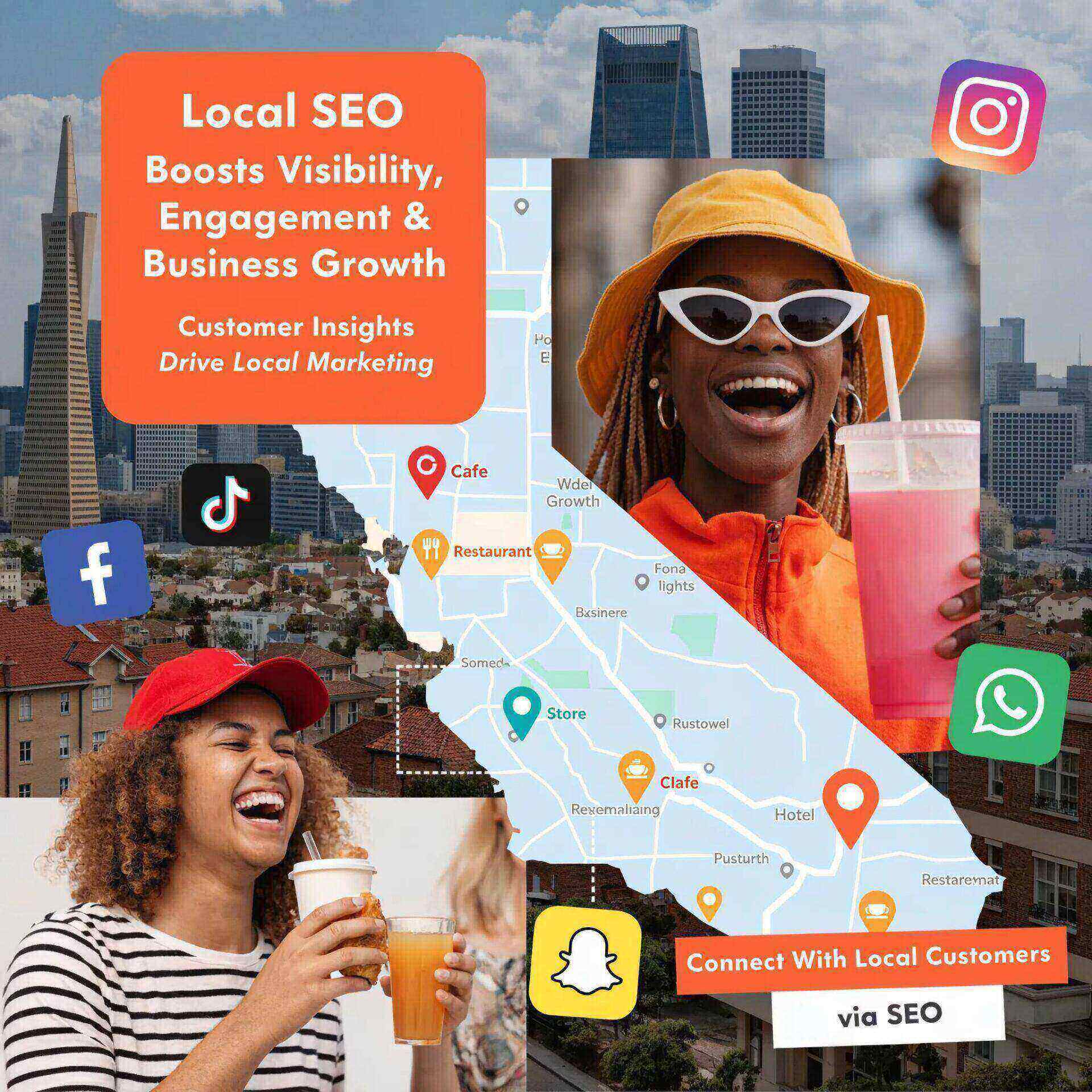
Local SEO pulls a business into the results people see when they search for something nearby. For instance, 76% of people who search for something nearby visit a business within a day. The work itself is unglamorous: local keywords, a Google My Business profile that is complete and current, a steady flow of customer reviews, links from other local sites, and page copy that names the neighborhoods you actually serve. The traffic it earns is smaller in volume than a broad campaign and far readier to buy.
Which Online Advertising Solutions Deliver ROI for California SMBs?
Paid advertising is where a small budget gets tested fastest. Four options carry most of the load for California small businesses.
- Google Ads: As a pay-per-click (PPC) platform, it allows businesses to target specific keywords, making it ideal for driving immediate traffic.
- Facebook Ads: These ads enable precise targeting based on demographics, interests, and online behavior, making them effective for reaching diverse audiences.
- Instagram Ads: Engaging visuals in Instagram ads can capture the attention of younger demographics, ideal for brands aiming to connect with millennials and Generation Z.
- Native Advertising: Ads formatted to match the content around them, which tends to hold engagement while widening brand exposure.
Test two of them at low spend, watch which one produces booked work rather than clicks, and move the budget there.
How Do Local Digital Marketing Strategies Cater to Diverse California Markets?
California is not one market. A campaign that lands in Fresno can fall flat in Oakland, and the same product may need two different pitches within a single county.
Language, cultural references and localized content change how a message reads to the person receiving it. Knowing who each segment is, and adapting the wording and the imagery for them, matters more than the volume of ads you run.
What Are the Best Practices for Geographic and Demographic Targeting in CA?
Localized campaigns come down to three habits, applied to specific geographic and demographic segments.
- Audience Segmentation: Analyzing customer data to create segments based on demographics, location, and behavior ensures targeted messaging.
- Localized Content: Developing content that reflects local customs and languages increases relevance and relatability.
- Utilizing Data Analytics: Implementing analytics tools can provide insights into customer behaviors and preferences, driving more informed campaign strategies.
Together they keep the message pointed at the people most likely to respond, instead of at everyone.
Why Is Integrating Multi-Channel Marketing Critical for California Small Businesses?
Customers rarely stay on one channel. They find you on social media, check the website, read an email, then walk in the door, and the experience should hold together across all four.
Working several channels at once means meeting people where they already are rather than waiting for them to come to you. When the message stays consistent across those handoffs, trust builds and more of the audience converts.
Which Content Marketing and Email Campaigns Drive Engagement in California Small Businesses?
Content brings people in and email brings them back. For a California small business, that pairing is usually cheaper than buying the same attention twice.
What Content Types Are Most Effective for Local Engagement?
Three formats do the most work with a local audience:
- Blog Posts: Informative and engaging articles that address local issues or interests often attract significant readership.
- Videos: Visual content, especially storytelling videos about local products or services, helps capture attention.
- Social Media Posts: Regular updates, promotions, and interactive content can engage local customers directly.
Used together, they build both traffic and the kind of familiarity that turns a reader into a repeat customer.
How Do Email Marketing Best Practices Enhance Customer Retention in CA SMBs?

Email is still the cheapest way to keep an existing customer. Three habits make the difference:
- Personalization: Tailoring messages based on customer preferences and behaviors increases open rates and engagement.
- Segmentation: Sending targeted emails to specific customer segments boosts relevance and effectiveness.
- Clear CTAs: Including clear calls-to-action encourages recipients to take desired actions, such as visiting a website or making a purchase.
Do those three and retention improves without adding a dollar to the ad budget.
How Does Affordable Web Design Support California Small Business Growth Online?
Every campaign eventually sends someone to your website, which makes the site the place where marketing spend is either converted or wasted.
What Features Define Effective Small Business Websites in California?
The small business sites that convert share three traits:
- Responsive Design: Ensures optimal viewing across various devices, facilitating a better user experience.
- Fast Loading Times: Websites should have fast load times to prevent high bounce rates and retain visitors effectively.
- Clear Navigation: An intuitive site structure helps users easily find information, improving engagement.
None of the three is expensive on its own, and skipping any one of them costs more in lost enquiries than it saves.
How Can Scalability and Performance Be Balanced with Budget Constraints?
Growing a site without overspending is mostly a sequencing problem.
- Affordable Hosting Solutions: Opting for reliable and budget-friendly hosting ensures optimal website performance while minimizing expenses.
- Utilizing Cost-Effective Tools: Implementing the right digital tools that offer essential features without excessive costs can streamline operations.
- Phased Growth Approach: Small businesses should focus on scaling incrementally, allowing for adjustment of strategies based on performance and budget availability.
Built in that order, the site can grow as revenue does instead of ahead of it.
Digital Promotion Channels for Small Business Growth
This article examines the management of digital promotion channels as a key factor in the growth and development of small businesses within the context of rapid digitalization and evolving consumer behavior. The relevance of the topic stems from the increasing importance of online communication tools in the business environment, the limited financial and human resources available to small enterprises, and the growing need for cost-effective, targeted, and measurable marketing strategies. In today's competitive market, digital channels offer small businesses unique opportunities to reach wider audiences, build recognizable brands, and compete with larger market players by leveraging the flexibility and interactivity of digital tools.
Managing Digital Promotion Channels as a Factor in Small Business Growth, Y Rybalchenko, 2025
What Are Transparent Reporting and Measurement Practices for Digital Marketing Success?
Reporting is where marketing stops being a matter of opinion. Clear numbers, shared openly, let a business decide what to keep funding and what to cut.
Which KPIs Best Reflect Digital Marketing Performance for California SMBs?
Three key performance indicators carry most of the decisions for a small business:
- Website Traffic: Measures the volume of visitors to a website, indicating overall interest.
- Conversion Rates: Tracks the percentage of users taking specific actions, highlighting the effectiveness of campaigns.
- Engagement Metrics: Includes metrics like social media shares and comments, reflecting audience interaction with content.
Read together, the three show whether the marketing is reaching people, persuading them, or neither.
How Can Small Businesses Use Data to Optimize Marketing Strategies Continuously?
Analytics tools track campaign performance, surface trends and show where a change is warranted. The value is in acting on what they show.
Set a fixed review schedule rather than checking only when something feels wrong. A business that reads its numbers on a rhythm notices a market shift while there is still time to respond to it.
How Do California Marketing Agencies Differentiate Themselves with Local Expertise?
What separates one California marketing agency from another is usually local knowledge rather than a longer service list.
Why Choose a California-Based Digital Marketing Agency for Your Small Business?
Working with a California-based agency brings three practical advantages:
- Local Insights: Agencies with a deep understanding of regional markets can tailor strategies effectively.
- Network Connections: California-based agencies often have extensive local networks, providing clients with valuable partnership opportunities.
- Cultural Relevance: These agencies are better equipped to craft messages that resonate with the local audience.
That local knowledge is what keeps a campaign aligned with the community it is aimed at.
What Distinguishes Leading Agencies in SEO and PPC Focus for California SMBs?
Among agencies working on SEO and PPC for California small businesses, a few things separate the strong from the average:
- Proven Track Records: Successful case studies in improving local SEO and PPC performance give these agencies credibility.
- Innovative Strategies: Leaders in this space consistently adapt to new digital trends, ensuring their approach remains effective.
- Client-Centric Focus: Close working relationships, so services are shaped around what the business actually needs.
Ask any agency to show all three before you sign anything.
Frequently Asked Questions
What digital marketing services do California small businesses need first?
Most start with the same five: local SEO, PPC campaign management, social media marketing, content marketing and email. Local SEO earns the nearby searches you already deserve, PPC buys traffic while that builds, social and content give people a reason to follow along, and email brings past customers back. Pick one or two, get them working, then add the rest as budget allows.
How does local SEO make a small business easier to find in California?
Local SEO tunes your site and profiles for searches happening near you. In practice that means local keywords, a complete and current Google My Business profile, asking customers for reviews, earning links from other local sites, and page copy that names the areas you serve. The payoff is not raw traffic volume but visitors close enough to call you or walk in the same day.
Which online advertising channels give a small business the best return?
Google Ads reaches people already searching for what you sell, so it drives traffic fastest. Facebook Ads target by demographics, interests and online behavior. Instagram Ads suit visual brands aiming at younger buyers. Native advertising blends into surrounding content and lifts exposure. Run two at low spend, compare which produces real enquiries rather than clicks, and shift the budget accordingly.
How should marketing change across different California markets?
California holds many audiences, so one message rarely lands everywhere. Segment your customer data by location, demographics and behavior, then adapt language, imagery and cultural references for each segment. Two campaigns can sell the identical product and still need different words, different photos and different offers depending on the community they are written for.
What kind of content and email actually keeps local customers coming back?
Blog posts about local issues, video that shows the story behind a product or service, and regular social updates all pull local readers in. Email is what keeps them. Personalize messages around what a customer has bought or browsed, segment the list so each group gets something relevant, and give every send one clear call to action.
Which numbers tell a small business whether its marketing is working?
Website traffic shows how many people are finding you, conversion rate shows how many of them act, and engagement metrics such as shares and comments show whether the content connects. Read all three together, on a set schedule, rather than only when something feels wrong. Steady reporting is what turns a marketing budget into decisions instead of guesses.