

Most wasted Google Ads budget comes down to one thing: showing ads to people who were never going to buy. Audience targeting is how you fix that. This guide covers the segmentation methods, targeting techniques, and metrics we lean on when managing paid campaigns, plus how to handle Customer Match and remarketing lists without running afoul of privacy rules. Get audience targeting right and everything else in the account gets easier.
Key Takeaways
- Segment audiences by intent, demographics, and behavior before you spend. Broad targeting burns budget on people who were never going to convert.
- Remarketing re-engages past visitors who did not convert; Customer Match uses first-party data like email lists to reach existing customers across Google.
- Layer audience segments (demographics stacked with behaviors) to sharpen delivery, and use exclusions so you stop paying to reach people who already converted.
- Judge targeting on CTR, conversion rate, CPC, and ROAS, and back every read with conversion tracking wired into Google Analytics, not gut feel.
- Privacy rules such as GDPR shape how remarketing lists can be built, so collect user consent up front rather than retrofitting it later.
Segmentation Methods
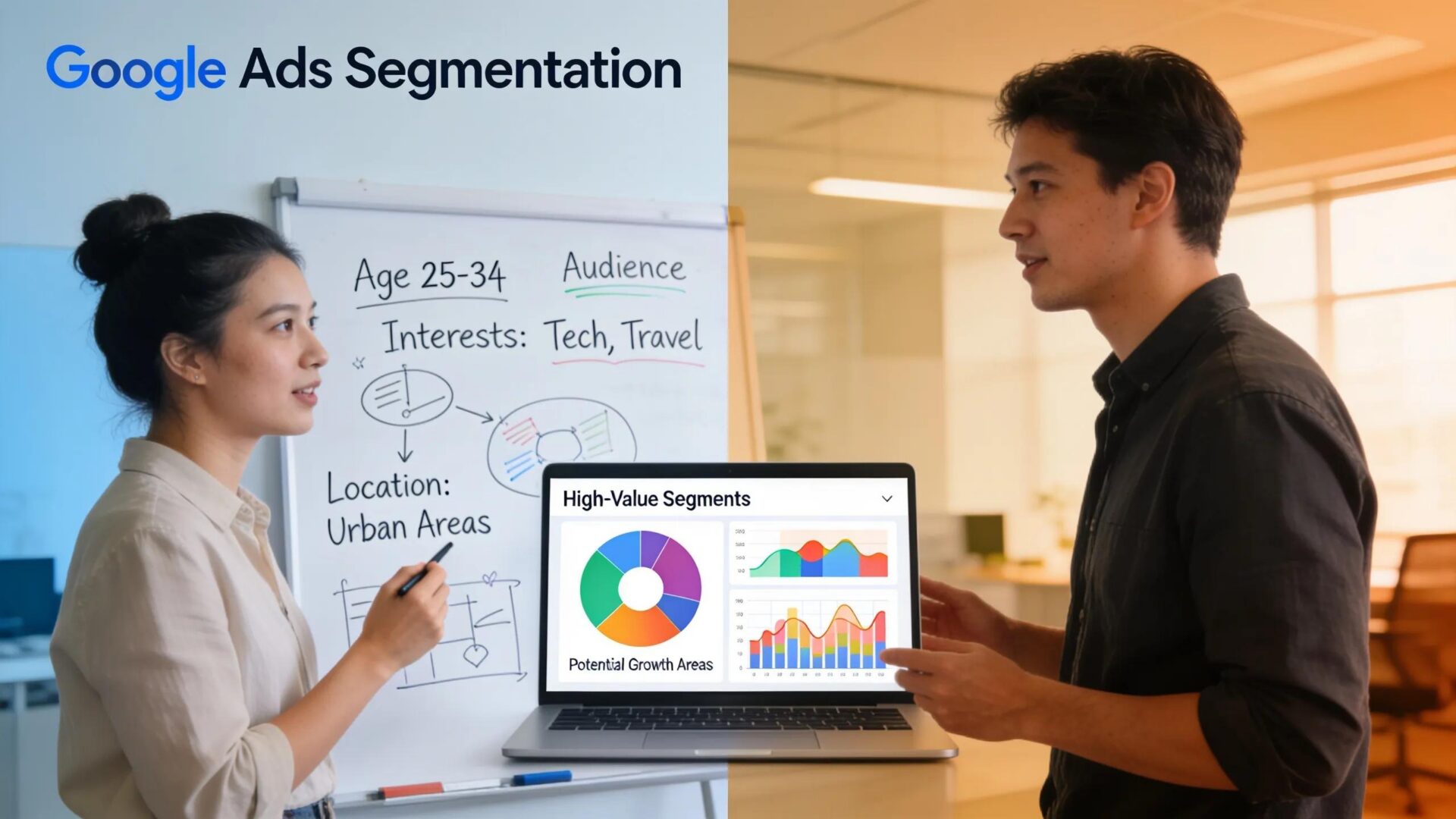
Segmentation is where good accounts separate from mediocre ones. Split a broad audience into smaller groups and you can match each ad to what that group actually wants; the difference shows up quickly in performance and engagement.
Intent-Based Segmentation
Intent-based segmentation groups people by what their behavior and searches say they want. Someone comparing options is not the same prospect as someone ready to buy, and your ads should treat them differently. Bidding on high-intent keywords during the purchase-consideration stage is usually where conversion rates improve first.
Demographic and Behavioral Segmentation
Demographic and behavioral segmentation works from data points like age, gender, interests, and online habits, including purchasing behavior. It lets you match the ad to the buyer. A luxury product pitched to demographics with higher disposable income will hold attention far better than the same ad sprayed at everyone.
Lookalike Audiences
Lookalike audiences take your existing customer data and find new people who match the same profile. The algorithm handles the pattern-matching; your job is feeding it a clean seed list. Done well, this extends your reach without loosening your targeting, because every new prospect already looks like a proven customer.
Targeting Techniques
Picking the right targeting technique decides whether your ads actually reach the people you segmented for. A few methods do most of the work in optimizing ad placements and visibility.
Keyword Targeting
Keyword targeting is still the foundation. Identify the high-intent keywords tied to your products and services, and be just as deliberate about negative keywords, which keep your ads out of irrelevant searches and stop the quiet budget bleed most accounts never notice.
Automated Bidding Strategies
Automated bidding adjusts your bids in real time based on a range of signals. Target CPA (Cost Per Acquisition), for example, optimizes bids from past performance data to chase conversions at a cost you set. It earns its keep once the account has enough history to learn from.
Real-Time Bid Optimization
Real-time bid optimization means reacting to live signals — competitor moves, shifting market conditions — instead of waiting for a weekly report. Watch the performance metrics and adjust while it still matters. In competitive auctions, speed is the edge.
Metrics for Measuring Success
You cannot manage targeting you do not measure. A handful of KPIs tells you whether campaigns are working and what to change next.
Key Performance Indicators (KPIs)
Click-through rate (CTR), conversion rate, and cost-per-click (CPC) are the core three. CTR tells you the ad matches the audience, conversion rate tells you the landing page holds up, and CPC tells you what the auction thinks of your relevance. Read them together, not in isolation, and keep them tied to actual business objectives.
Conversion Tracking
Conversion tracking is what connects ad clicks to actions that matter. Wire it into Google Analytics and you can see exactly what your spend produced. Without it, every optimization decision is a guess dressed up as strategy.
A/B Testing
A/B testing settles arguments with data. Run parallel campaigns with one variable changed, keep the winner, repeat. The results should feed directly into your future advertisements and targeting choices, not sit in a report nobody opens.
What Are the Key Google Ads Audience Types to Know?
Google Ads gives you several distinct audience types, and each behaves differently. Know which is which before you build campaigns around them.
How Do Remarketing and Customer Match Audiences Differ?
Remarketing audiences are people who visited your website or app and left without converting. Customer Match audiences are built from first-party data (email addresses your customers gave you) and let you reach those existing customers on Google platforms. They solve different problems: remarketing is for re-engagement, Customer Match is for retention and loyalty.
What Role Do In-market and Affinity Audiences Play in Targeting?
In-market audiences are people actively shopping for products or services like yours: the ones worth paying a premium to reach when you want immediate sales. Affinity audiences group people by long-term interests, which makes them better for building a brand connection than closing a sale this week. Most accounts should run both, just for different jobs.
How Can You Create and Manage Effective Google Ads Remarketing Lists?

A remarketing list is only as good as the plan behind it. Here is the short version of how to build one that performs.
What Are the Steps to Set Up Remarketing Lists Using First-Party Data?
Start by collecting user data from interactions on your own site: page visits, downloads, purchases. Build segments from that behavior and from demographics so each list maps to a distinct message. Then place the remarketing tags so audience actions get tracked accurately. Lists built on real behavior will beat a generic all-visitors list every time.
The same logic applies to service businesses in competitive local markets. A site built specifically for lawyers in San Francisco, for example, can pull in new clients by presenting expertise clearly, ranking in local search, and giving visitors a fast path to contact. We cover that approach in our guide to website development and design for lawyers in San Francisco.
How Does Privacy-First Strategy Impact Remarketing List Management?
Privacy regulation changed remarketing for good. GDPR and similar rules require user consent and transparency when you collect data, and that flows straight into how you can use it in your marketing efforts. Build consent into the funnel from day one; retrofitting it later is far more painful.
Which Best Practices Optimize Google Ads Customer Match Strategies?
Customer Match rewards businesses that take care of their first-party data. Get the inputs right and it becomes one of the more dependable targeting options in the platform, and a real driver of long-term brand loyalty.
How to Integrate First-Party Customer Data for Maximum Audience Match?
Pull relevant data from your existing customers (what they bought, how they engage) and use it to shape the ads they see. Ads that line up with what a customer already prefers perform better and feel less like advertising, which is the whole point.
What Performance Metrics Demonstrate Customer Match Effectiveness?
Watch customer retention rates, conversion values from matched audiences, and overall return on ad spend (ROAS). Those three tell you whether Customer Match is earning its keep, and they give you the feedback loop to keep adjusting your strategies.
What Are Advanced Techniques for Audience Layering and Exclusion in Google Ads?
Layering and exclusion are where targeting gets precise. Both are underused, and both can lift campaign performance without a single new creative.
How to Combine Multiple Audience Segments to Improve Campaign Precision?
Layering means stacking criteria — demographics on top of behaviors, for instance — so ads only show to people who meet all of them. The audience gets smaller, but every impression is more likely to count, and engagement and conversion rates usually follow.
When and How Should You Use Audience Exclusion to Sharpen Targeting?
Exclusions stop your ads showing to people who already converted or were never the right fit. That cuts ad fatigue and keeps budget where it can still do something. Deciding who not to reach is as much a targeting decision as deciding who to reach, so treat the exclusion list with the same care as the audience list.
Frequently Asked Questions
What audience types can I target in Google Ads?
Google Ads supports several audience types: in-market audiences (people actively shopping for products like yours), affinity audiences (grouped by long-term interests), remarketing audiences (past visitors who did not convert), Customer Match audiences (built from first-party data such as email lists), and lookalike audiences modeled on your existing customers. Each one does a different job (awareness, re-engagement, or retention), so most accounts combine several rather than relying on one.
What is the difference between remarketing and Customer Match?
Remarketing targets people who visited your website or app but left without converting, so it is built from tracked on-site behavior. Customer Match is built from first-party data your customers gave you directly, typically email addresses, and lets you reach those known customers on Google platforms. Use remarketing to re-engage lost prospects and Customer Match to retain and grow existing customers. The two complement each other rather than compete.
How do I set up a remarketing list in Google Ads?
Start by collecting user data from interactions on your own site, such as page visits, downloads, and purchases. Build segments from that behavior and from demographics so each list maps to a distinct message. Then implement remarketing tags so audience actions are tracked accurately. Before launch, confirm your data collection meets consent requirements under rules like GDPR, because privacy compliance limits how lists can be built and used.
Which metrics matter most for judging audience targeting?
Click-through rate shows whether the ad matches the audience, conversion rate shows whether the traffic is qualified, and cost-per-click shows what you are paying for relevance. For Customer Match specifically, watch customer retention rates, conversion values from matched audiences, and return on ad spend. Set up conversion tracking through Google Analytics first; without it, none of these numbers connects back to real business outcomes.
When should I use audience exclusions in Google Ads?
Use exclusions whenever a group cannot benefit from seeing your ad: people who already converted, existing customers being shown an acquisition offer, or segments outside your market entirely. Exclusions cut ad fatigue and keep budget from going to impressions that cannot produce a sale. Review them regularly, though: someone who converted last month may be a legitimate remarketing target for a different offer today.
Can I combine multiple audience segments in one campaign?
Yes, and you usually should. Layering segments — demographics stacked with behaviors, for example — narrows delivery to people who meet every criterion, which makes each impression more likely to count. The trade-off is reach: stack too many layers and the audience becomes too small to spend against. Start with two complementary layers, watch engagement and conversion rates, and tighten or loosen from there.