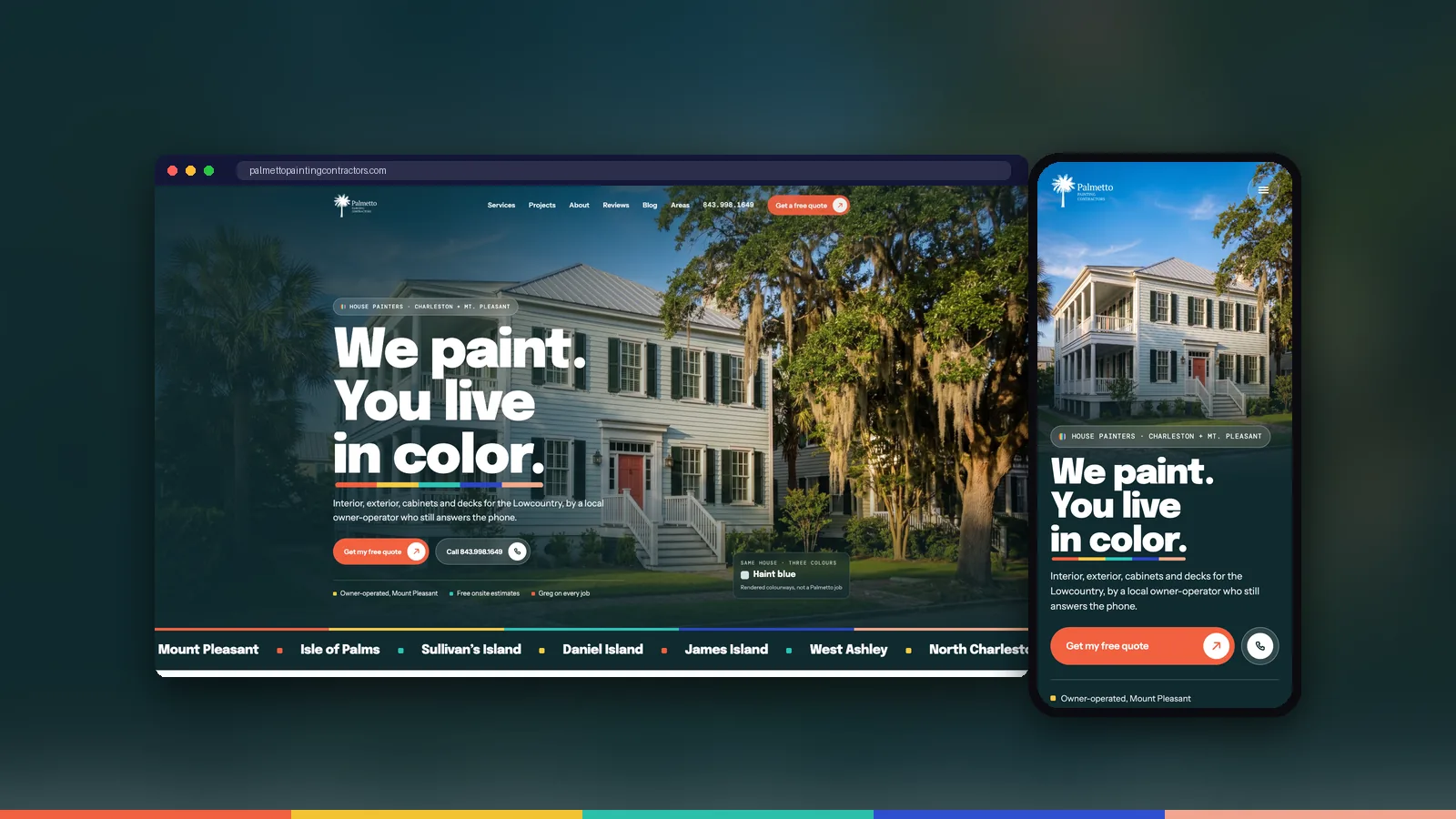
On September 21, 2026 we launched Law Firm Marketing Texas, a Texas attorney digital marketing agency run by ByteZero Inc. It does three things for Texas firms: law firm SEO, websites and Google Ads. Every page it writes is checked against Texas Disciplinary Rules 7.01 to 7.06, and every report it sends counts signed clients. California firms stay with our California brand, California Law Firm SEO.
We set it up as a separate brand for a regulatory reason. Texas lawyer advertising has a filing step that California does not, and a homepage written for a Los Angeles firm is the wrong document to file in Austin.
The short version
- Law Firm Marketing Texas is ByteZero's Texas-only practice for law firms, live at lawfirmmarketingtexas.com since September 2026.
- Texas Rule 7.04 requires most lawyer advertisements to be filed with the State Bar's Advertising Review Committee within ten days of first use. Rule 7.05 exempts most of a firm website, but not the homepage.
- Criminal defense comes first because Texas search demand for it is large and its clicks cost a fraction of injury clicks.
- The brand reports signed clients and cost per signed client, not rankings.
- Our published legal results are Californian. We will not make a Texas performance claim until a Texas client produces one.
Why Texas gets its own brand
Most states let a law firm publish an ad and move on. Texas asks for paperwork. Rule 7.04(a) says a lawyer shall file an advertisement with the Advertising Review Committee of the State Bar of Texas "no later than ten (10) days after the date of dissemination", together with an application and a fee.
Websites get a partial exemption, and the wording of it is the reason we built separate Texas pages.
The only material on the website that may need to be filed pursuant to this Rule is the contents of the homepage.
Texas Disciplinary Rules of Professional Conduct, Rule 7.05, Comment 2
So the homepage is a filing document. It has to name a responsible lawyer, describe the practice in terms the rules allow, and avoid words Texas restricts. A California template rebadged with a Texas phone number fails that test, and the fix after filing is slower than writing it right the first time.
Ron Davies, our founder, put it this way at launch: "Texas has a filing deadline and one permitted way to say the word specialist. That belongs in the brief, not in a revision round."

The rules that shape every page
Every Texas project starts with a one-page rules file that the writer keeps open next to the draft. Most of the rules are common sense. These five are the ones that actually change a sentence or a page.
| Rule | Plain-English summary | How it changes the pages we write |
|---|---|---|
| 7.04(a) | File most advertisements with the Advertising Review Committee within ten days of first use | Each homepage goes to the firm as a filing-ready document with the application details listed |
| 7.04(c) | A lawyer may seek pre-approval at least 30 days before first use | For new firms we flag this option before launch, so the partner can decide |
| 7.05(b) | Website pages are exempt from filing, except the homepage | Practice and city pages still follow 7.01 and 7.02; the homepage gets the strictest review |
| 7.02(b) | No statement that a lawyer is certified or has special competence, except as the rule allows (for example, Texas Board of Legal Specialization certification) | The word "specialist" appears only where a lawyer holds that certification |
| 7.01(d) | A required statement or disclaimer must be made in each language used in the communication | Spanish pages and Spanish ads carry their disclaimers in Spanish |
Source: Texas Center for Legal Ethics, Rule 7.04 and the Rule 7.01, 7.02 and 7.05 pages on the same site, read November 2026. We are marketers, not ethics counsel; the firm's own lawyer signs off on every filing.
Why criminal defense first
We opened with criminal defense and DWI because the numbers made the case. In Google Keyword Planner for Texas, pulled in November 2026, "houston criminal defense lawyer" averages 2,900 searches a month and "san antonio criminal defense attorney" averages 1,900. A defense firm can compete for its own city on a budget that would not last a week in personal injury, where the click prices are much higher.
Dallas already has established legal marketing companies, Androvett among them, and the people choosing an agency will compare us with firms like that. Our answer is narrower: data by metro and a rules file. Texas is also not one market. In the same pull, "Lubbock criminal defense attorney" gets about 590 searches a month, a fifth of Houston's volume, yet the top-of-page bid range Google shows for it reaches roughly 1.6 times Houston's high end. That pattern usually means a few firms fighting over a small pool. It is why we build city by city, from each metro's own demand, click prices and courts, instead of copying one template across the state.
The Texas site also lists personal injury, family law, immigration, estate planning and business and employment work. We will take those on, but our first Texas page plans are built for defense firms.
What the three services look like in Texas
The Texas brand runs the same disciplines we run everywhere, with the rules file on top of each.
For SEO we start with what people in a firm's counties actually type. A DWI practice in Fort Worth and one in El Paso get different page plans, because the searches are different, and each county the firm serves gets its own local signals. For AI search, we put a two or three sentence answer directly under each question heading and mark the FAQ up with schema, so tools like Google's AI Overviews have a clean passage to lift. That is the practical end of AI marketing for law firms. If you want the long version of how we do SEO, it is on our search engine optimization page.
We hand-build the websites, put schema on every page, and keep tuning until PageSpeed clears 95 on mobile. Most starter sites go from kickoff to launch in seven days, which is the timeline we publish on the Texas site. How we design is explained on our AI web design page.
In Google Ads we split budgets by practice and by county, so a slow month in family law cannot quietly eat the criminal defense budget. The Texas offer includes Spanish ad groups for San Antonio, El Paso and the Rio Grande Valley. The offer covers Google, Bing and Meta, and we start wherever the firm's cases are actually searched for. The broader service is under paid ads management.

What we report, and what we will not claim
Our law firm programs report signed clients, because that is what a managing partner pays for. Rankings and impressions show up in the appendix, if at all.
The clearest public record we have is Californian. For California Employer Attorney, an employer-defense firm, the Google Ads account tracked 532 leads from September 2025 to August 2026, and cost per conversion fell 16% between September to November 2025 and June to August 2026. Those numbers come from that firm's ad account and belong to California.
No Texas performance claim exists yet. When a Texas client produces one, we will publish it with its source and date, the same way we publish the California numbers. Until then the Texas site sells method and rules knowledge, which is all it can honestly sell.
How a Texas engagement starts
The first two weeks look the same for every firm. We read the current homepage against Rules 7.01, 7.02 and 7.05 and mark every line that would need changing before a filing. We pull search demand for each practice in each county the firm serves, so the page plan follows what people type rather than what the firm wishes they typed. And we check the intake path: who answers the phone after hours, whether forms reach a person, and whether calls and forms are tracked as separate conversions.
That last check is usually where the money is. A firm can rank well and still lose cases because nobody calls back within the hour, and no amount of SEO fixes a voicemail box. When intake is the problem, we say so before anyone spends on ads.
Only then do we write. The homepage draft goes to the responsible lawyer with the filing details attached, the practice pages follow, and the ad account is built last, once tracking can tell us which clicks turn into consultations.
Who this is for
A Texas firm with one to five attorneys, a practice area with real search demand, and a homepage nobody has checked against Rule 7.05 is the clearest fit. A firm already ranking well with a compliant site and a reliable intake process probably does not need us, and we would tell them so in the first call. Larger firms with an in-house marketing lead often want the rules file and the Spanish ad structure more than a full retainer.
If you are a California firm, nothing changes: California Law Firm SEO still handles California, and our legal industry page covers both.
Frequently Asked Questions
What is Law Firm Marketing Texas?
It is ByteZero Inc's Texas attorney digital marketing agency, launched September 21, 2026 at lawfirmmarketingtexas.com. It provides law firm SEO, websites and Google Ads for Texas firms, written to Texas Disciplinary Rules 7.01 to 7.06 and reported in signed clients.
Do Texas law firms have to file their website with the State Bar?
Usually only the homepage. Rule 7.04 requires most advertisements to be filed within ten days of first use, and Rule 7.05(b) exempts website content except the homepage, unless the homepage itself is otherwise exempt. The firm's own lawyer should confirm each filing.
Can a Texas lawyer call themselves a specialist online?
Only within Rule 7.02(b). A lawyer may say they practice in a field, but may not claim certification or special competence unless the rule allows it, for example certification by the Texas Board of Legal Specialization in the area advertised.
Which SEO services for lawyers does the Texas brand offer?
Practice and city pages sized to real search demand, schema markup and Google Business Profile work. A firm serving both Bexar and Travis counties, for example, gets separate pages for each, because the courts and the searches differ. Reporting is in signed clients.
Does the Texas brand run Spanish-language ads?
Yes. The Texas offer includes Spanish ad groups for San Antonio, El Paso and the Rio Grande Valley, and Rule 7.01(d) means any required disclaimer is repeated in Spanish wherever Spanish is used.
What law firm marketing services results can ByteZero show for Texas?
None yet, and we say so on purpose. Our published legal results are Californian, such as 532 tracked Google Ads leads in twelve months for California Employer Attorney. Texas results will be published only once a Texas client produces them.