
An AI SEO strategy for a small business is an ordered plan: first make sure crawlers can read your pages, then put a direct answer at the top of the pages that earn money, then make your business name, address and phone number read the same everywhere they appear. Google's own documentation says it adds no technical requirement for appearing in its AI features beyond being indexed and eligible for a snippet. The phrase "ai seo strategy" averages 170 searches a month in the United States, according to Google Keyword Planner on October 5, 2026. ByteZero is a small and medium business marketing agency with offices in Van Nuys, California and Huntersville, North Carolina, and this is the 90-day order we would work in.
Two limits up front. We cannot promise that an assistant will name you, and nobody outside those companies can, so every step below is something you can check yourself. And the sequence is deliberately dull. It starts with plumbing and ends with measurement, because the middle of the plan only works if the first month was done properly.
Key Takeaways
- Google says a page needs to be indexed and eligible to show with a snippet to appear as a supporting link in AI Overviews or AI Mode, and that there are no additional technical requirements. Month one is therefore ordinary crawl hygiene, done properly.
- Pew Research Center's analysis of March 2025 browsing data found that users who saw a Google AI summary clicked a traditional result link in 8% of visits, against 15% for users who did not. Plan for fewer clicks per impression and measure conversions as well.
- In the same Pew data, 8% of one- or two-word searches produced an AI summary, against 53% of searches with ten words or more. Money pages should answer the full-sentence question, not only the head term.
- OpenAI recommends allowing OAI-SearchBot in robots.txt if you want to appear in ChatGPT search, and says it can take about 24 hours for its systems to adjust after a robots.txt change.
- Our own GA4 property recorded 11 sessions from chatgpt.com, perplexity.ai and claude.ai combined between September 5 and October 2, 2026, out of 1,072 sessions. The channel is real and small, which is a reason to build it carefully rather than pay for it loudly.

The 90 days at a glance
This is the whole plan on one screen. Each row has a pass test you can run without paying anyone, and each phase waits for the one before it.
| Window | Days | Work | Pass test |
|---|---|---|---|
| Phase 1 | 1 to 30 | Crawl access, server-rendered copy, one H1 per page, structured data that matches visible text | HTTP 200 for each money page when fetched with an AI crawler user agent; key copy visible in raw HTML |
| Phase 2 | 31 to 60 | Answer-first block, one unit-bearing table and a question-led FAQ on each money page | The direct answer sits in the first 100 words of raw HTML |
| Phase 3 | 61 to 90 | One business name, address and phone across site, Business Profile and directories; review requests | Zero conflicting name or phone variants across the listings you audit |
| Ongoing | Monthly | Search Console, GA4 referral sources, a dated named-by-assistant check | Same questions, same engines, same wording each month |
Days 1 to 30: fix what a crawler reads
Google's AI features and your website page lists the fundamentals it still treats as worthwhile: crawling allowed in robots.txt and by any CDN or hosting infrastructure, important content available in textual form, internal links that make content findable, and structured data that matches the visible text. None of that is new. What changes in an AI plan is how literally you check it.
"There are no additional technical requirements."
Google Search Central, AI features and your website
Here is the check we run first, and it takes ten minutes. Open your robots.txt and read it as a stranger would. Then fetch each money page with a command-line tool while presenting a crawler's user agent, for example the OAI-SearchBot string OpenAI publishes on its crawler overview. You want a 200 status and your real copy in the response. A robots.txt that says Allow is only half the answer, because a firewall or CDN rule can still refuse the request. Google's page says exactly this by naming the CDN and hosting infrastructure alongside robots.txt.
We ran that test on our own site for this article. On October 5, 2026 bytezeroinc.com returned 200 for /ai-seo, /ai-search-optimization, /generative-engine-optimization, /free-ai-visibility-audit and /llms.txt when requested with the OAI-SearchBot user agent string, and the robots.txt names ten AI-related user agents with Allow: GPTBot, OAI-SearchBot, ChatGPT-User, ClaudeBot, anthropic-ai, PerplexityBot, Perplexity-User, Google-Extended, Applebot-Extended and CCBot. That is a statement about our file on that date, not a promise about how any assistant treats it. OpenAI separates its bots by purpose: OAI-SearchBot is for search results in ChatGPT, GPTBot is for training, and a site can allow one and disallow the other.
The rest of month one is the work our search engine optimization service starts with:
- One H1 per page, and a title tag that says what the page is rather than repeating the H1.
- The service, price basis, hours and service area in text, not inside an image or a script-rendered widget. View the page source, not the inspected DOM, and look for your first paragraph.
- Structured data only for what the page actually shows. If the FAQ schema asks a question, the same question must be visible as a heading.
- A Google Business Profile with current hours, categories and phone, because Google's page lists keeping Business Profile information up to date as part of the same fundamentals.
- Search Console verified for the site, which Google's page points to for discovering and diagnosing technical issues.
Days 31 to 60: put the answer first
The Pew study matters here for one reason. Longer, question-shaped searches are where AI summaries appear.
| Type of Google search (Pew, March 2025 browsing data) | Share that produced an AI summary |
|---|---|
| One or two words | 8% |
| Ten words or more | 53% |
| Begins with who, what, when or why | 60% |
| Contains both a noun and a verb (full sentence) | 36% |
| All searches in the study (68,879 searches) | 18% |
Source: Pew Research Center, July 22, 2025. The study covers Google only, and its authors note that AI summaries change over time, so treat the shares as a snapshot of April 2025 results for searches made in March 2025.
A head term such as "plumber" is a short search. The question a buyer types before hiring is a long one: how much notice does a plumber need for a water heater replacement, or what does an agency do in the first month. Your money page should contain the plain-sentence answer to the three or four questions a buyer actually asks, and it should contain it early.
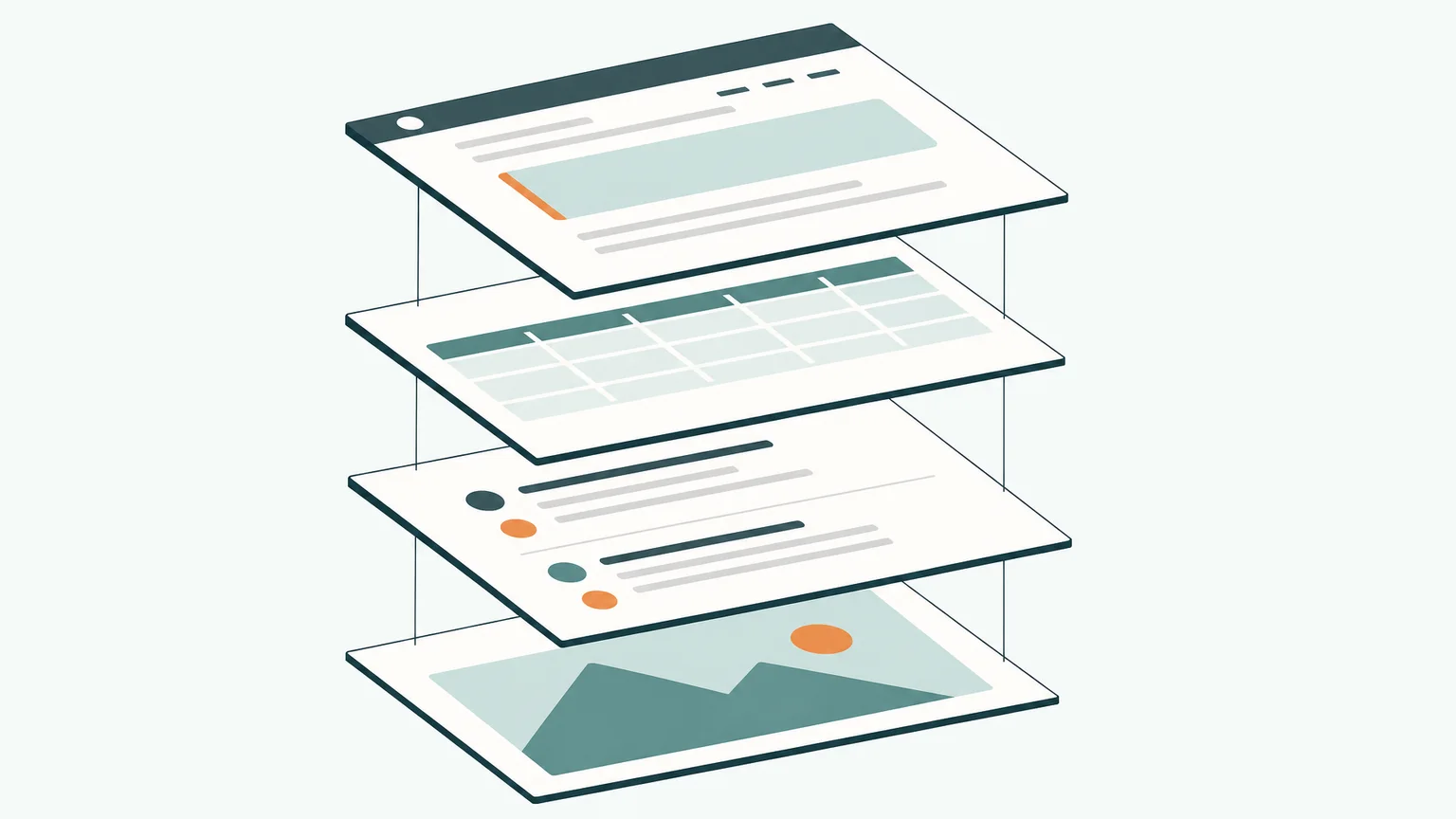
The shape we use is the one Google also describes from its side: people-first content that is unique and not a commodity, supported by images and by structured data that matches the page. In practice, each money page gets four things:
- An opening block of about 60 words. Business name, one sentence on what you do and for whom, one fact with its unit and date, and the named towns you serve. Never "and surrounding areas".
- One table with units. Hours, sizes, durations, lead times, warranty years. A table is easy to quote because every cell is a fact with a unit.
- A question-led FAQ. Five to eight questions taken from your own sales calls and your Search Console queries, each answered completely in the first sentence.
- One thing only you could write. A job, a local constraint, a process step. This is what makes the page non-commodity, and it is the part no tool can produce for you.
Our own AI SEO service page is the page we would apply this to first, and it is a good example of why the order matters. It earned 2,716 impressions at an average position of 40.2 between June 30 and October 2, 2026, according to Search Console, and one click. Impressions with no clicks at position 40 are a sign the page is not yet the answer to anything specific, which is the problem this phase addresses.
Days 61 to 90: one name, everywhere
The third phase is the least glamorous and the one small businesses skip. In our September 23, 2026 sweep of nine client and agency sites, the brands that got named had a checkable fact beside one consistent business name, and several of the sites that were not named carried two names for one business. If your Business Profile says one name, your directory listing says another and your site footer says a third, you have given a model more than one version of the company to choose between.
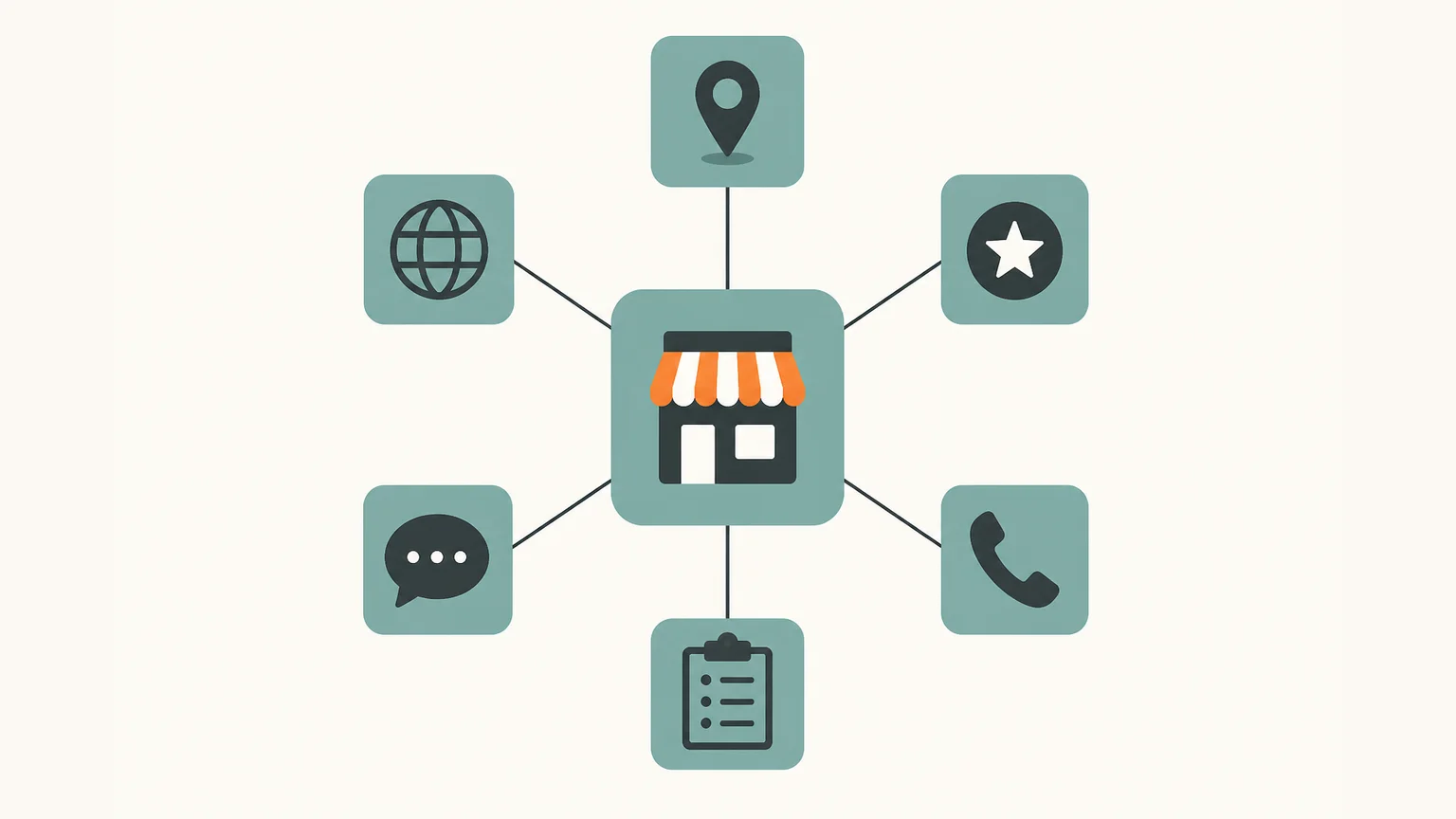
The audit is a spreadsheet. List every place your business appears: the website footer, the Business Profile, the major directories relevant to your trade, the social profiles, your llms.txt if you publish one, and the structured data on your homepage. Record the name, the street address, the phone number and the category in each. Anything that differs is a fix, and the fix is boring: edit the listing to match the version on your site.
We hold ourselves to the same standard and we are still working through it. In our own probe panel on September 23, 2026, which asked Gemini and OpenAI for the best AI SEO and digital marketing agency for small businesses in each of four cities (Los Angeles, Charlotte, Charleston and Tampa), Gemini named ByteZero once, in last place of seven names for Los Angeles, and none of the other three Gemini prompts or any of the four OpenAI prompts named us. The panel used Gemini 2.5 Flash with grounding and gpt-4.1-mini with web search, so it says only that those engines did not name us on those prompts that day. It is the reason this plan includes a monthly check rather than a promise.
Reviews belong in this phase, but only the real ones. Ask each customer after the job is done, in the same words, and do not offer anything in return. Do not write them, buy them or reword them. A listing network full of identical names and a handful of genuine reviews is more useful than a large number of thin ones.
What not to buy
Google's page also says specific optimization is not required for AI Overviews and AI Mode, and the existing SEO fundamentals continue to be worthwhile. A vendor selling a secret layer on top of that owes you a source.
- A guaranteed placement in an assistant. Neither Google's page nor OpenAI's crawler page, both of which we read for this article, offers one.
- An llms.txt file as the main deliverable. We publish one, so we are not against it, and our September 23 scan found it at 3.1 KB. But Google's AI features page says you do not need new machine-readable files or AI text files to appear in these features, and OpenAI's crawler overview does not recommend llms.txt for sites, so treat it as a cheap extra and not the strategy.
- A list of prompts treated as a keyword plan. A prompt is a probe for measuring whether you are named. It is not demand. Nobody types it.
- Doorway-style pages for every town and every question. Volume of pages without unique content is the opposite of what Google's May 2025 guidance on AI experiences asks for, which is unique, non-commodity content.
If you want a specialist to do the work rather than a checklist, our AI search optimization and generative engine optimization pages describe how we run phases two and three, and the free AI visibility audit runs the phase one checks against your site.
Measuring: clicks, calls and a dated check
Google says sites appearing in AI Overviews and AI Mode are included in the overall search traffic in Search Console, in the Performance report under the Web search type. There is no separate AI report to wait for. That means the same dashboard that shows your impressions already contains this traffic, mixed in. Google also says clicks from results with AI Overviews are higher quality, with users more likely to spend more time on the site, and notes you can also track conversions and time on site in Google Analytics.
Given the Pew click numbers, conversions are the safer thing to count. If a result page with an AI summary sends a click in 8% of visits and one without sends it in 15%, then a flat click line over a rising impression line is not automatically failure. A call or a form submission is what to count.
Three measurements we would set up in week one and read monthly:
- Search Console, Web search type. Impressions, clicks and position for each money page and for the long, question-shaped queries separately from the head terms.
- GA4 by session source. Assistants arrive as ordinary referrers. For September 5 to October 2, 2026 our property showed chatgpt.com 9 sessions, perplexity.ai 1 and claude.ai 1 out of 1,072. Traffic that arrives without a referrer lands in the direct bucket, which was 906 sessions in the same report, so this count is a floor and not a total.
- A named-by-assistant check, dated and worded identically each time. Write four or five buyer questions with your towns in them, run them on the engines you care about on the same day each month, and log the date, the engine and whether you were named. Change nothing in the wording from one month to the next, or the trend means nothing.
A new business should expect none of these numbers to move in the first 30 days. Search Console data has to accumulate, and OpenAI itself describes a lag of about 24 hours just for a robots.txt change to be picked up. Phase three, in particular, is a slow one, because directories and profiles update on their own schedules.
Who this plan is not for: a business that needs leads next week, which is a paid-search question first, and a business that has not yet got a Business Profile or a site that loads. Both of those come before everything above.
Questions about AI SEO strategy
What is an AI SEO strategy?
An AI SEO strategy is the ordered work that makes a business eligible to be named or linked in AI search answers: crawlers can read the pages, each money page opens with a direct answer, and the business name, address and phone number match across the site and its listings. Google says it has no additional technical requirements for AI Overviews and AI Mode beyond ordinary indexing and snippet eligibility.
What should a small business do first for AI search?
Check that crawlers can fetch your money pages. Request each one with an AI crawler user agent, confirm a 200 status and confirm your real copy is in the raw HTML, because robots.txt, a CDN or a firewall can each block access independently. Only then work on answer-first copy.
Does an AI SEO strategy replace traditional SEO?
No. Google states that the same foundational SEO practices apply to its AI features as to Search overall, namely technical eligibility, compliance with policies and helpful, reliable, people-first content. An AI strategy is the same fundamentals applied with more literal checking and more attention to direct answers.
How long does an AI SEO strategy take to show results?
Expect the first month to produce no measurable change, because it consists of fixes and Search Console data takes time to accumulate. The 90-day order here is a work sequence, not a results timeline, and nobody can honestly guarantee when or whether an assistant will name a business.
Do I need llms.txt?
Neither source we read for this article recommends it. Google's AI features documentation says you do not need new machine-readable files or AI text files to appear in these features, and OpenAI's crawler overview does not recommend llms.txt for sites, so it is a low-cost extra at best. Spend the time on crawl access, answer-first pages and consistent listings first.
How do I know if ChatGPT or Gemini is sending me traffic?
Look at GA4 session sources for referrers such as chatgpt.com, perplexity.ai and claude.ai. Between September 5 and October 2, 2026, ByteZero's own property recorded 9, 1 and 1 sessions from those three, out of 1,072 sessions in total, and visits without a referrer are counted as direct, so the figure is a minimum.
Do AI summaries reduce clicks to my website?
In Pew Research Center's analysis of March 2025 Google browsing data, users who saw an AI summary clicked a traditional result link in 8% of visits, against 15% for users who did not, and clicked a link inside the summary in 1% of visits. Google says the clicks it does send from AI Overviews are higher quality, so look at conversions as well as clicks.