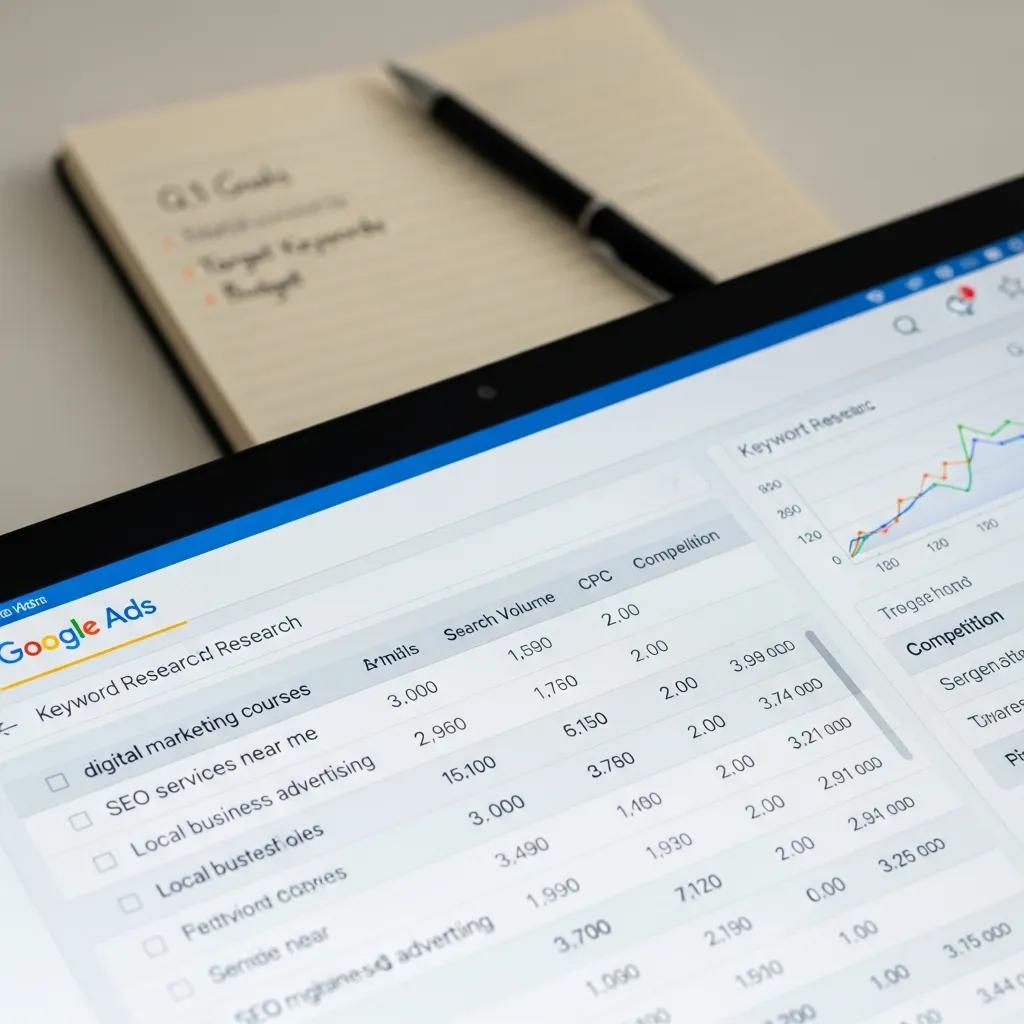
Legal PPC is its own discipline. The searches are expensive, the ethics rules are strict, and a sloppy campaign burns budget fast. We manage Google Ads accounts for attorneys, and this guide walks through how we approach the work: building the campaign, picking keywords, staying inside bar advertising rules, setting bids and budgets, and tracking which clicks actually turn into consultations.
Key Takeaways
- Campaign setup starts with defining the target client, researching keywords, and writing ad copy with a clear call to action.
- Local and high-intent keywords carry most legal campaigns because they capture searchers who are ready to hire nearby.
- Attorney ads must avoid false or misleading claims and identify the responsible lawyer; specific rules vary by state bar.
- Automated bidding such as Target CPA or Maximize Conversions, paired with budget pacing, keeps spend efficient across the month.
- Linking Google Ads to Google Analytics and watching click-through rate, conversion rate, and cost per acquisition is how ROI gets measured.
How Do You Set Up a Google Ads Campaign for a Law Firm?
Most wasted spend in legal accounts traces back to setup decisions, not day-to-day management. Get the foundation right before the first ad runs.
Where Should an Attorney PPC Campaign Start?
Every attorney campaign we build starts with the same three jobs:
- Define the client you want: Practice area, location, and case type decide everything downstream, from keyword lists to landing pages.
- Research keywords before writing ads: Build the list around terms prospective clients actually type, then group them tightly so each ad matches its search.
- Write ad copy that states the service plainly: Say what the firm handles and what the searcher should do next. A clear call to action beats clever.
None of this is glamorous, but accounts built this way are far easier to tune once real data comes in.
Which Keywords Should Law Firms Target in Paid Search?
Keyword selection decides who sees the ads. Two categories carry most legal campaigns:
- Local keywords: Pair the practice area with the city or county. Someone searching a geographic term is usually looking to hire nearby, not to read.
- High-intent keywords: Phrases that signal someone is ready to talk to a lawyer tend to convert better than broad informational terms.
A tighter keyword list also means fewer junk clicks to pay for.
How search engines sell these placements has been argued over in courtrooms and law journals for years.
Google AdWords & Keyword Advertising
search engines sell advertisement placement for sponsored links to the highest bidder. For a further discussion of Google’s AdWords, the user, not keyword search results.
Beyond Rescuecom v. Google: The Future of Keyword Advertising, 2010
What Advertising Compliance Rules Apply to Attorney PPC?
Advertising rules are the part of legal PPC that generalist agencies get wrong. An ad that would be fine for a plumber can draw a bar complaint for a lawyer.
Researchers have been documenting the tension between lawyer marketing and professional rules for a long time.
Legal Marketing & Attorney Advertising Regulations
As a result of the increase in the number of lawyers, the need arose for them to become as well-known as possible in the market, both with the aim of attracting new clients and retaining the loyalty of existing clients. The manner in which lawyers can make themselves known has raised a number of problems as a result of legislative barriers restricting their rights in this regard. By conducting research, the authors tried to identify the ways in which lawyers can make their services known without violating the legal provisions.
Marketing Elements in the Field of Legal Services, B Tescasiu, 2023
How Do Advertising Regulations Affect Lawyer Google Ads?
The rules that matter most for paid search come down to two principles:
- No false or misleading communications: Ads have to describe the services accurately, with no exaggeration about experience or outcomes.
- Clear identification of the responsible lawyer: The ad, or the page it lands on, needs to make plain which attorney or firm is behind it.
The point of these rules is consumer protection. Specifics vary by jurisdiction and state bar, so check your own rules before anything goes live.
What Compliance Checks Keep PPC Campaigns Inside the Lines?
Two recurring checks keep campaigns out of trouble:
- Ad content review: Re-read every live ad on a schedule and confirm it still reflects what the firm actually offers and stays within bar rules.
- Data privacy compliance: Intake forms and tracking collect sensitive information, so handle it in line with privacy laws such as GDPR or CCPA where they apply.
A short recurring review is cheap insurance compared with answering a bar inquiry.
How Do You Optimize Google Ads for a Law Firm?
Launch is the starting line. What separates accounts that produce consultations from accounts that just spend is the optimization work afterward.
Which Bid Strategies and Budgeting Techniques Work Best for Attorneys?
On the bidding side, two techniques do most of the work:
- Automated bidding: Google’s options like Target CPA or Maximize Conversions adjust bids in real time based on performance data, which usually beats managing bids by hand once the account has conversion history.
- Budget pacing: Spread spend across the month so the budget does not run dry in week one or sit unspent in week four.
Neither works well without accurate conversion tracking feeding it, which is the next piece.
How to Track Conversions and Measure ROI on Legal Paid Search Campaigns?
If you cannot tell which clicks became consultations, you cannot manage the account. Two basics:
- Link Google Ads with Google Analytics: Connecting the two shows what visitors do after the click, not just whether they clicked.
- Watch the numbers that matter: Click-through rate, conversion rate, and cost per acquisition tell you where the account is leaking money.
Once those numbers are trustworthy, budget decisions stop being guesswork.
The analytics literature makes the same point about conversion tracking and ROI:
PPC Conversion Tracking & ROI for Law Firms
Paid search campaigns complemented organic efforts for holistic visibility. Conversion tracking allowed ROI measurement for digital campaigns.
Digital Marketing Analytics: Unlocking Data-Driven Success, R Dev
Which Attorney PPC Strategies Are Worth the Effort?
Beyond the fundamentals, a few tactics consistently earn their keep in legal accounts.
Why Does Retargeting Work So Well for Law Firms?
Hiring a lawyer is rarely a first-visit decision, which is exactly the situation retargeting was built for:
- Audience specificity: You are showing ads to people who already visited the site, so the audience has proven interest.
- Message personalization: Ads can reference the practice area a visitor looked at instead of repeating a generic pitch.
The firm stays visible while the prospect compares options, and a portion come back to finish the inquiry they started.
What Do Case Studies Show About Law Firm PPC?
The same patterns show up across published case studies of law firm campaigns:
- More inquiries from tighter targeting: Firms that narrowed campaigns to specific practice areas and locations tended to see inquiry volume improve.
- Recognition from consistent presence: Showing up repeatedly in search results made firm names familiar to prospects before they ever clicked.
None of that comes from a set-and-forget campaign. It comes from steady management.