

Key Takeaways
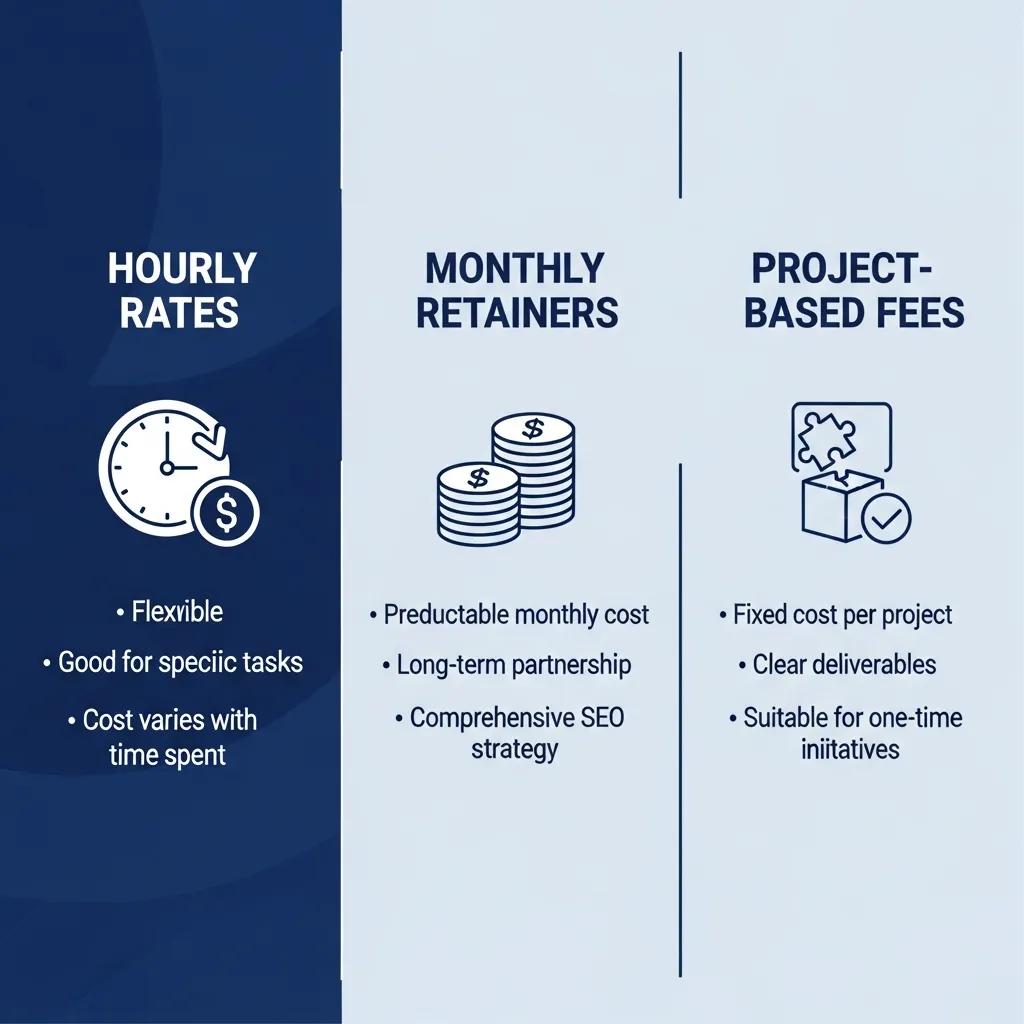
- Agencies price attorney SEO three ways: hourly, monthly retainer, or per project.
- Monthly retainers tend to suit small and mid-size firms that need continuous work at a predictable cost.
- Competition in your practice area, your location, and the scope of services drive the price more than anything else.
- Judge ROI by organic traffic growth, keyword rankings, and lead generation — not activity reports.
- Vet agencies on legal SEO experience, transparent pricing, and transparent reporting.

Frequently Asked Questions
What are the common SEO pricing models for law firms?
Most agencies price attorney SEO one of three ways: an hourly rate, a monthly retainer, or a project-based fee. Hourly billing suits firms with fluctuating needs, retainers cover ongoing work at a fixed monthly cost, and project fees fund a specific one-time campaign. The right choice depends on your firm’s size, goals, and financial resources.
Which SEO pricing model fits small to medium law firms best?
A monthly retainer usually serves small and mid-size firms best because it delivers predictable costs and the continuous work needed to stay visible in a competitive market. A project-based engagement makes sense when a firm wants to fund one specific campaign without a long-term contract. Match the model to your marketing objectives rather than defaulting to whatever an agency proposes.
What factors influence the cost of attorney SEO services?
Three factors do most of the work: competition, location, and scope. Heavily contested practice areas demand more resources to gain visibility, firms in urban markets typically pay more than firms in smaller ones, and a broader scope of services such as keyword research, on-page optimization, and link building raises the price. Weigh all three when setting an SEO budget.
What services are included in a typical law firm SEO package?
Most law firm SEO packages bundle keyword research, on-page optimization, content creation, and link building. Basic tiers cover the essentials at a lower cost, while premium tiers add broader strategy and advanced analytics. Read what each tier actually delivers before comparing prices, because two packages at the same price can contain very different amounts of work.
How can law firms measure the ROI of SEO?
Track organic traffic growth, keyword rankings, and lead generation. Together these show whether the work is producing movement and whether that movement turns into inquiries. Review them regularly against what you are paying, so decisions about renewing, expanding, or replacing an SEO engagement rest on your own data rather than on an agency’s reporting narrative.
What should law firms look for when selecting an SEO agency?
Prioritize demonstrated experience with legal SEO, transparent reporting, transparent pricing with no hidden fees, and a collaborative working style. An agency that can explain exactly what it is doing and what you are paying for is far easier to hold accountable — and accountability matters more over the life of an engagement than any pitch-deck claim.